
by Chris Williams | May 19, 2026 | Blog
It’s 10:47 on a Tuesday night, and Daniel is staring at a slide deck that’s somehow both finished and not at all ready. His board meeting starts in fourteen hours. He’s the managing partner of a twenty-eight-person management consulting firm. He has investors. They want answers. And the QuickBooks exports glowing on his second monitor are giving him exactly none of them.
The numbers are accurate. That’s not the problem. The problem is that “accurate” and “useful” aren’t the same word. A P&L with revenue down 6% from last quarter doesn’t tell anyone why—whether it’s a timing blip, a client churn warning, or the price of saying yes to a strategic project that won’t bill for another sixty days. Daniel knows the answer. The deck doesn’t.
This is the gap most consulting firm owners live with, and it’s the gap that quietly erodes professional reputation one board meeting at a time. So let’s talk about how to close it.
Why Financial Data Isn’t the Same as Stakeholder Communication
Stakeholders—investors, board members, lenders, partners—don’t want a numbers dump. They want three things: Are we on track? What changed? What should we do? Most reporting answers only the first one, and even that gets muddled.
Here’s the uncomfortable truth. A clean monthly close is table stakes. It proves you can count. It doesn’t prove you can lead. When the chair of your board scans your deck looking for the story, what she’s really asking is whether the person presenting the numbers actually understands the business behind them. Confidence travels both ways. If your reports make her work to find the story, she’ll start wondering what else she has to do to find it.
This is where reputation gets built or quietly chipped away. Not in the pitch. In the eleventh slide of a Tuesday morning quarterly update.
What Stakeholder-Ready Reporting Actually Looks Like
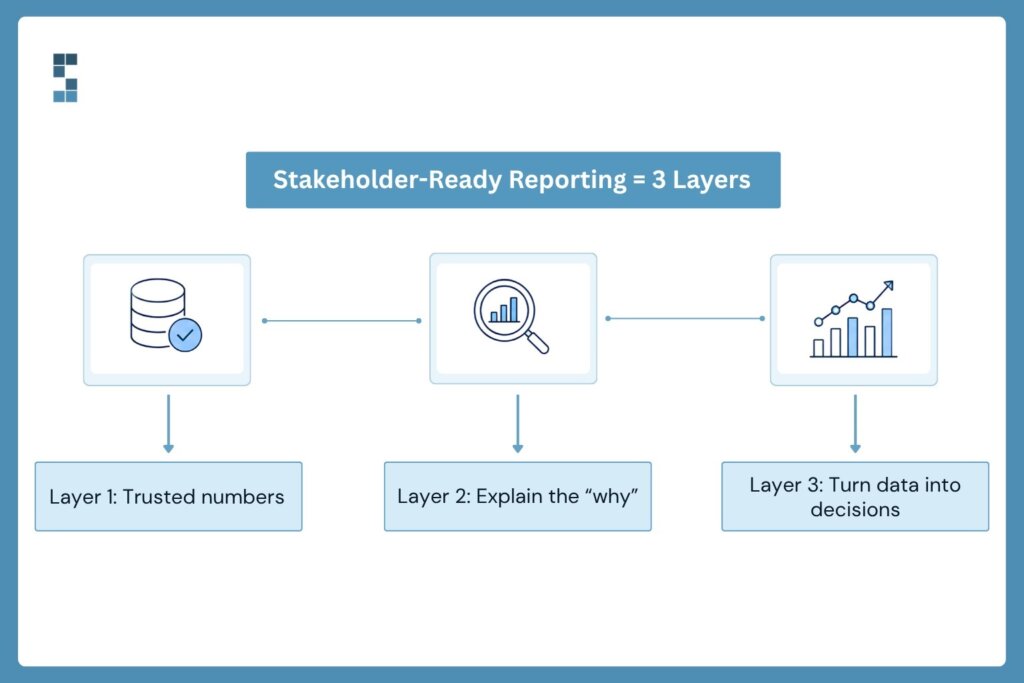
Think of it as three layers.
The first layer is the numbers themselves—accurate, reconciled, on time. This is the foundation, and it’s non-negotiable. Paul, a search-fund operator and System Six client, put it this way: “I have told people that hiring them was the best decision I made at the start of the business. We just finished our 2022 audit, and the auditors found exactly 0 errors by S6.” Zero errors isn’t a flex. It’s the floor. Stakeholders should never have to wonder whether your numbers can be trusted, because the moment they do, every other slide becomes suspect.
The second layer is variance analysis. Why is revenue down 6%? Variance analysis tells the story behind the swing—a delayed implementation, a one-time consulting spike last quarter, a Net-60 payment that landed on the wrong side of month-end. Done well, it also flags what’s actionable versus what’s noise, so your board doesn’t waste a meeting chasing a one-off invoice timing issue when the real conversation should be about pipeline conversion. Stakeholders don’t punish you for variances. They punish you for not seeing them coming, or worse, for being unable to explain them after the fact.
The third layer is the part most firms skip: strategic commentary. A short narrative—three or four sentences—that translates the data into a decision-relevant story. “Margins compressed in Q2 because we onboarded two new associates ahead of the Henderson engagement; utilization normalizes in August.” That’s a sentence a board member can do something with. A P&L isn’t.
Layer those three together, and you stop producing reports. You start producing communication. There’s a difference, and stakeholders feel it before they can name it.
From Defending Numbers to Driving Strategy
Here’s what changes when you walk into a board meeting with a real stakeholder package. The meeting itself shifts. Instead of spending forty minutes defending last quarter, you spend ten minutes summarizing it and thirty minutes planning the next one. Board updates stop feeling like trials and start feeling like working sessions.
That shift compounds. One System Six client, Marcus, captured it well: “I am in good hands with System Six, and I especially appreciate how they are inquisitive, ask follow-up questions, and look around corners.” Looking around corners is the whole game. When your financial reporting is built to surface what’s coming—not just record what already happened—your stakeholders stop reacting to surprises and start funding opportunities. Betsy, another client, framed the emotional side of the same shift: “System Six has done wonders for my stress level to feel like this is all now taken care of with a professional partner.” The stress leaves you as visibility moves into the system.
What does this look like in practice for a consulting firm? Monthly investor updates with a one-page summary, supporting financials, and a forward-looking commentary that names assumptions. Quarterly board packages with variance analysis, KPI trends (utilization, realized rates, pipeline conversion), and the two or three decisions you need from the room. Annual planning packages with scenario modeling so investors can see what success and stress both look like in numbers.
There’s a quieter benefit worth naming. Good investor communication isn’t just about the meetings on the calendar. It’s about the trust that gets built between them. When your monthly update lands in an inbox the same week every month, with the same structure, the same KPIs, and the same honest commentary, you become predictable in the best possible way. Investors who know what to expect from your reporting will give you the benefit of the doubt if one quarter something’s off. Investors who don’t, won’t.
None of this is exotic. It’s just disciplined. And the discipline is what builds the reputation.
Reputation Compounds. Or it erodes.
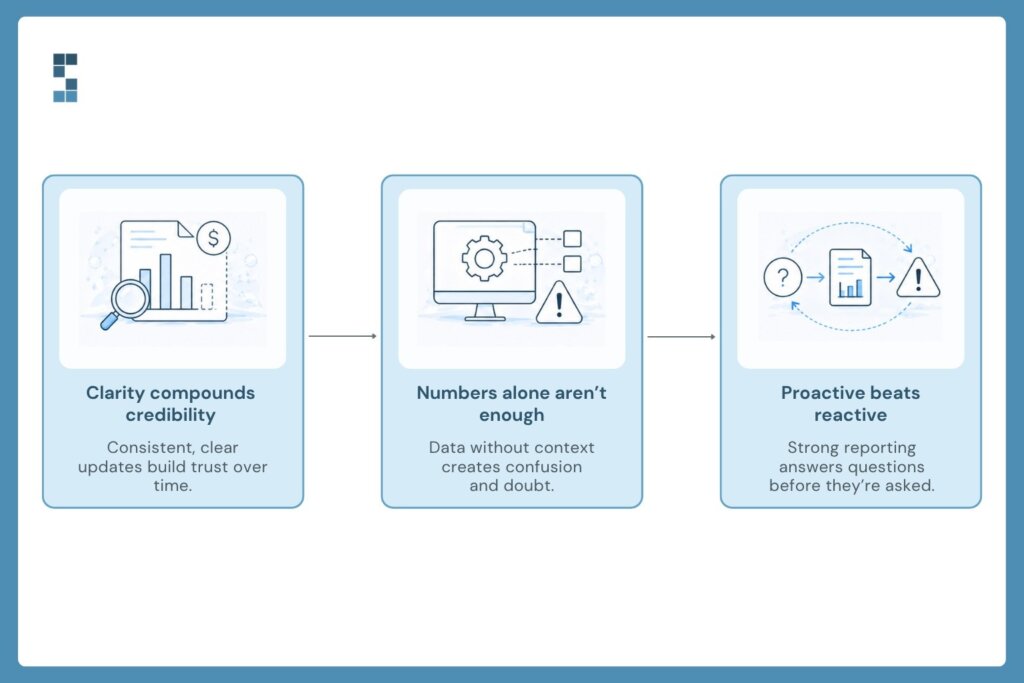
Every clean update is a small deposit in the trust account. Every confused meeting is a small withdrawal. Most firms don’t lose investor confidence after a single disaster. They lost it slowly, across eight or ten board meetings where the numbers were technically right but the story was always missing.
John, a System Six client running an investor-backed business, put a number on what good reporting feels like from the inside: “For any internal NPS or Customer Satisfaction tracking, please mark us down as an 11/10. Your team is awesome, proactive, and exactly what we need.” Proactive. That’s the word stakeholders are quietly grading you on. Are your reports proactive or reactive? Do they surface the question before your board has to ask it?
If you’re already great at this, keep going. If you’re not—and most founders aren’t, because nobody starts a consulting firm to become an accountant—the fix isn’t to work harder on Sunday nights. It’s to build the infrastructure once and let it run. That’s the work System Six does for consulting firms every day: accurate books, variance-ready reporting, board-grade packages, and a team that asks the follow-on questions before your investors do.
So, back to Daniel and his 10:47 PM problem. The deck he was wrestling with wasn’t broken because the numbers were wrong. It was broken because the numbers were alone. Give them company—variance, context, commentary—, and they stop being data. They start being confident.
What would your next board meeting look like if your numbers walked in already telling the story?
About System Six
System Six is a Seattle-based bookkeeping and financial services firm that helps small and mid-sized businesses streamline their financial operations. We specialize in providing technology-driven financial management solutions for consulting firms, enabling owners to focus on growing their businesses without worrying about cash flow, payroll, or compliance. Our team of over 40 professionals brings an average of 10+ years of accounting experience to every client relationship, serving more than 175 businesses across the U.S. With a 9.5/10 NPS score, we deliver the financial clarity and peace of mind that consulting firm owners need to thrive. Learn more at www.systemsix.com.

by Chris Williams | May 12, 2026 | Blog
It’s Tuesday morning. Caroline pulls up her P&L on the office laptop and stares at the numbers. Revenue looks strong. Margins look fine. Her coffee’s gone cold while she scrolls through the same spreadsheet for the third time. So why does she feel like she’s flying blind every time her senior consultants ask whether they should chase a new account?
Here’s the thing. Her books are clean. Her bookkeeper is great. But the report in front of her tells her exactly one thing — what already happened. It doesn’t tell her whether the next big move is a smart bet or a slow disaster.
This is the gap most consulting firm owners hit somewhere between their fifteenth and fiftieth employee. The numbers come in on time. The reports look professional. But nobody’s sitting next to them helping interpret what those numbers actually mean for next quarter. That’s the difference between bookkeeping and financial advisory. And it’s a difference that, once you feel it, you can’t unfeel.
If you’ve ever closed your laptop at the end of a long day, wondering whether the decisions you’re about to make are the right ones — and whether the numbers you’re staring at can actually tell you — keep reading.
Bookkeeping shows the past. Advisory shapes the future.
Bookkeeping is the rearview mirror. It tells you, with precision and care, where you’ve been. That matters. Without accurate books, you’ve got nothing to plan against. But the rearview mirror doesn’t help you read the road ahead.
A financial advisor — someone who actually knows your business, your industry, and your numbers — does the harder work. They translate ledgers into a language you can use. They turn last month’s numbers into next month’s decisions. They ask the questions you’re too tired or too close to ask yourself.
One System Six client put it perfectly. Working with us, he said, gives him “an outside view, a 35,000-foot look at what you’re doing that isn’t possible from the inside out.” That outside view is the whole point. When you’re elbow-deep in client work, you can’t see the patterns shaping your firm’s trajectory. Someone has to be looking from above. Someone has to be doing that for a living, across dozens of firms like yours, every single week.
Think of it this way. Your bookkeeper builds the dashboard. Your advisor helps you drive the car. Both are essential. Neither replaces the other. But too many firm owners think they only need the dashboard — and then wonder why they keep ending up in the wrong lane.
What a financial advisor actually does for you
So what does this person do, day to day, that earns the title “strategic”?
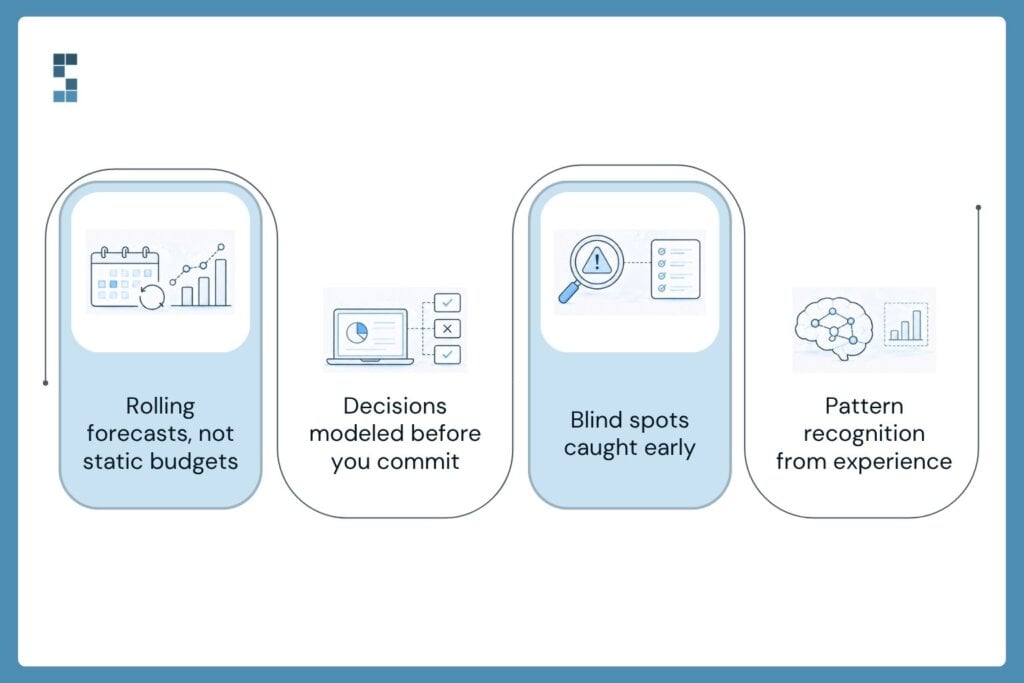
They forecast. Real forecasting — not a once-a-year budget you stop looking at by February, but a rolling thirteen-week cash flow that updates as reality shifts. They show you when money lands and when it leaves so that you can hire ahead of demand instead of behind it. They build a financial picture that breathes with your business, not one frozen in last quarter’s assumptions.
They model decisions before you make them. Should you take on the multi-state retainer? Open a second office? Bring on two senior consultants and a junior? A good advisor runs the math, surfaces the risks, and walks you through the scenarios. Marcus, one of our clients in the search fund world, put it like this: “I am in good hands with System Six, and I especially appreciate how they are inquisitive, ask follow-on questions, and look around corners.” Looking around corners. That’s the job.
They flag what you missed. They noticed the project that looked profitable but really wasn’t once you factored in partner oversight. They catch the slow drift in utilization before it shows up in the bottom line. Paul, another client, said it best: “S6 has been proactive at catching mistakes I’ve made or seeing challenges coming down the pike and asking me the right questions.”
Right questions. Not magic. Just experience, applied to your situation, before you trip. And it’s experience built across many businesses, not just one — patterns you can’t see from the inside of a single firm, but ones that jump out when you’ve watched dozens of firms scale and stumble.
What this looks like in real life
Back to Caroline. A few months into working with a financial advisor, she’s facing a real decision. A regional health system has offered her firm an eight-month engagement worth $1.4M. The work fits. The team can deliver. The problem? It requires hiring two senior consultants right now, and the engagement won’t start paying out for sixty days.
The old Caroline would have either said yes on instinct and prayed that cash held up, or said no out of fear and watched the opportunity walk away. The new Caroline has someone in her corner.
Her advisor pulls up the rolling forecast. They walk through three scenarios: full hire, phased hire, and contractor blend. They show her exactly which weeks would be tight, where the credit line might need to flex, and when the first invoice clears. They model what happens if the client pays on day forty-five versus day sixty. They flag the payroll cycle that lands right when receivables would be thinnest. By the end of the conversation, Caroline isn’t guessing. She’s deciding with data.
She takes the engagement. She structures the hiring in phases. Cash never wobbles. The firm grows by 22% that year, and she sleeps through the night.
This is the quiet, compounding value of advisory. It’s not flash. It’s not a single big save. It’s the steady, weekly removal of guesswork from the decisions that define your business. Over a year, that adds up. Over five years, it changes the trajectory of the whole firm.
The compounding return of clarity
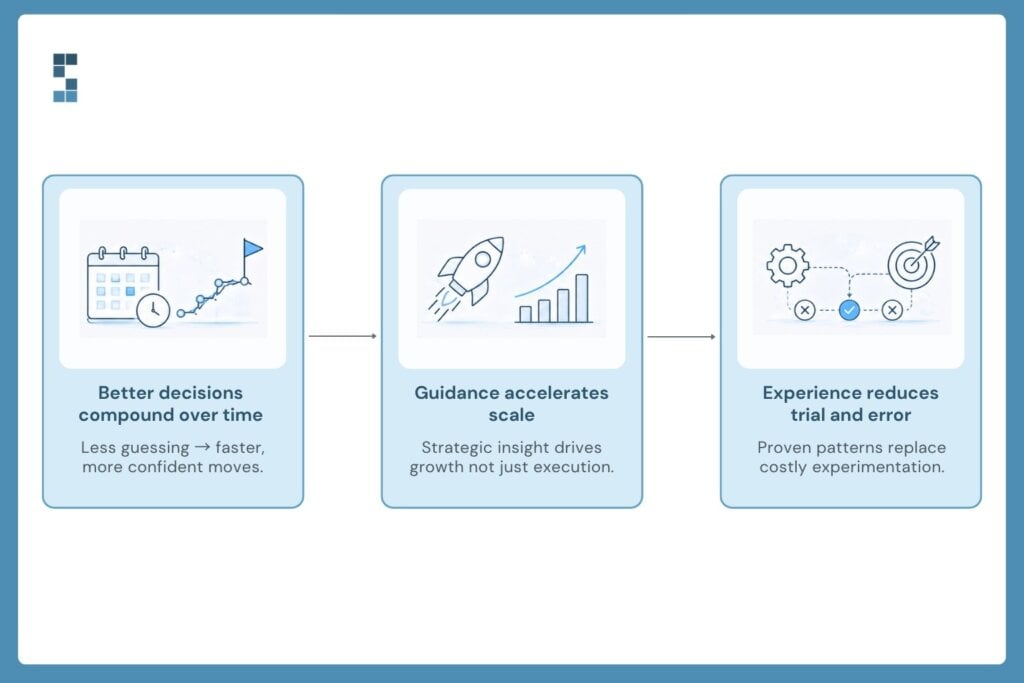
Here’s the part most firm owners underestimate. Strategic financial guidance isn’t a luxury you graduate to at $10M in revenue. It’s the very thing that gets you there.
The firms that outpace their peers aren’t necessarily the ones with the best consultants or the slickest brand. They’re the ones whose owners spend less time wondering and more time deciding. Less time staring at a P&L and asking “what does this mean?” More time saying “here’s our next move.”
That clarity has a name. It’s the financial advisor in your corner — the one who knows your business deeply enough to spot the trends before you do, and who’s been around enough firms like yours to know which moves work. The one who picks up the phone when you’re not sure whether to take the contract, hire the senior, or restructure the partner draws. Not because they’re cheaper than a full-time CFO, though they usually are. Because they’re often more curious, more honest, and more useful, across more than 175 businesses, our team has watched what works and what doesn’t — and that perspective shows up in every client conversation.
So here’s the question worth sitting with. When you look at your firm’s next big decision — the hire, the office, the new service line — are you guessing, or are you deciding?
If it’s still the first one, it might be time to put someone in your corner.
About System Six
System Six is a Seattle-based bookkeeping and financial services firm that helps small and mid-sized businesses streamline their financial operations. We specialize in providing technology-driven financial management solutions for consulting firms, enabling owners to focus on growing their businesses without worrying about cash flow, payroll, or compliance. Our team of over 40 professionals brings an average of 10+ years of accounting experience to every client relationship, serving more than 175 businesses across the U.S. With a 9.5/10 NPS score, we deliver the financial clarity and peace of mind that consulting firm owners need to thrive. Learn more at www.systemsix.com.
by Chris Williams | Nov 24, 2025 | Blog
Sarah checks her phone at 2 am. Again. The email notification glows in the darkness—payroll processing tomorrow, and she’s lying there doing mental math. Three big projects wrapping up this month, invoices going out next week, and payments probably 30 days after that. Maybe 45. Will the timing work? She’s got twelve consultants counting on her, and honestly, she’s not sure.
Here’s the thing: Sarah’s firm is busy. Really busy. Her team’s booked solid through next quarter. But busy doesn’t mean healthy, and revenue doesn’t always mean cash. Most consulting firms track the big numbers—total revenue, total expenses, what’s in the bank right now. But those numbers are like checking your destination on a map without looking at the route. You know where you want to end up, but you’ve got no idea if you’re about to drive off a cliff.
What consulting firms actually need are the metrics that work like vital signs—the ones that tell you what’s happening right now and what’s about to happen next. Think of monthly metrics as your firm’s pulse, blood pressure, and temperature all rolled into one dashboard. They don’t just show you where you’ve been. They show you where you’re headed in time to do something about it.
Why Monthly Matters (More Than You Think)
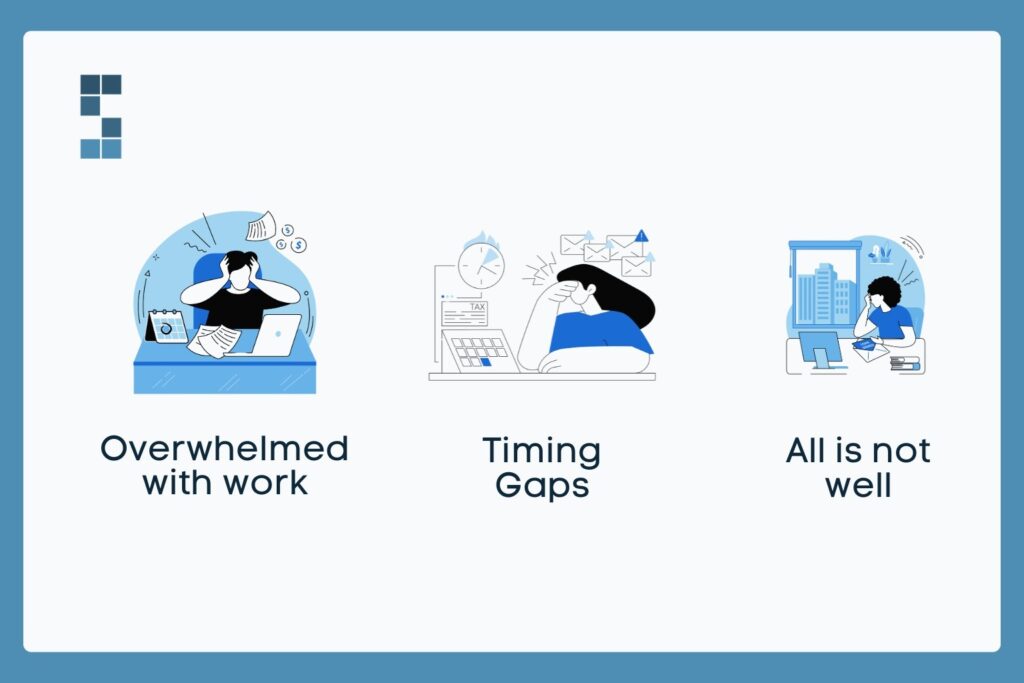
There’s a paradox at the heart of consulting businesses. You can feel swamped with work and still be heading toward a cash crisis. You can have a full pipeline and terrible margins. You can be growing revenue while profitability circles the drain.
The culprit? Timing gaps. What happens this month doesn’t show up in your bank account for 30, 60, or sometimes 90 days. That project you’re grinding on right now? The one keeping your team busy nights and weekends? You won’t see that money for at least a month after you finish the invoice and wait for payment. By the time you realize a problem exists, you’re already deep in it.
One System Six client discovered their utilization rate was actually 60%—despite everyone feeling overwhelmed. Turns out, their team was spending enormous chunks of time on internal meetings, administrative tasks, and “staying busy” rather than billing hours. They felt busy because they were. They just weren’t busy with the right things. Monthly tracking caught this pattern early enough to fix it before it became a hiring problem, a pricing problem, and eventually a survival problem.
Here’s what annual reports can’t do: they can’t warn you. They’re like finding out you had the flu last February. Interesting, sure. Useful? Not so much. Monthly metrics are different. They catch trends when you can still steer. They show you the storm clouds before the rain hits.
The Five Monthly Metrics That Actually Matter
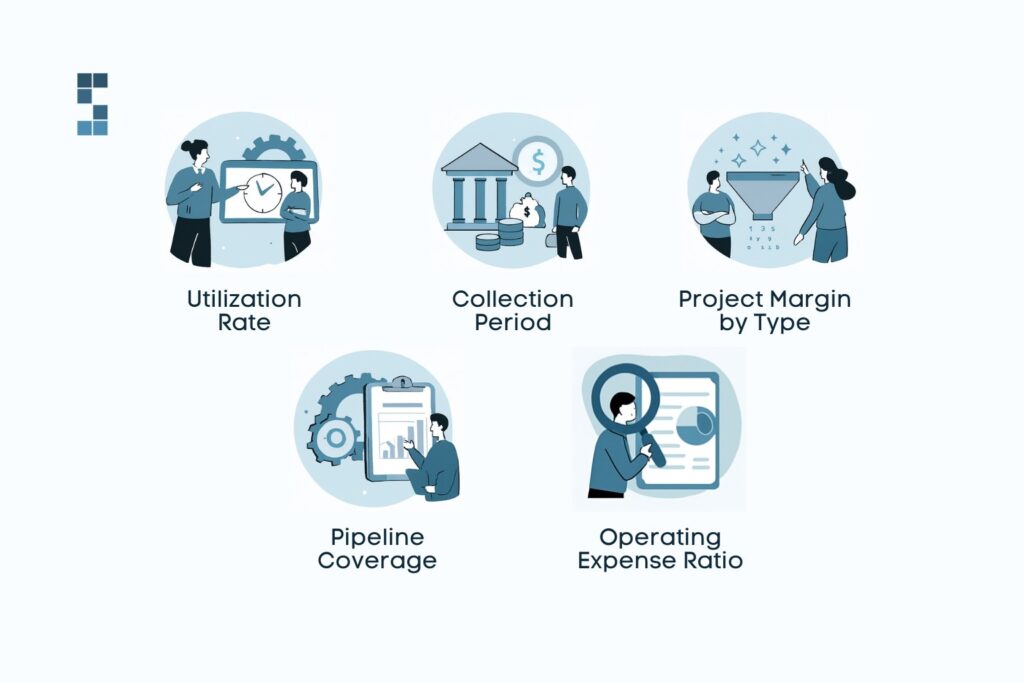
Not all metrics deserve your attention. Some are vanity numbers that make you feel good without telling you anything useful. Others are so granular they bury the signal in noise. These five hit the sweet spot—they’re simple to track, hard to game, and they tell you what you actually need to know.
Utilization Rate: Are You Actually Selling Your Inventory?
Your utilization rate is simple math: billable hours divided by available hours. But it’s anything but simple in what it reveals. For consulting firms, time is inventory. You can’t stockpile it. You can’t carry it forward. Every hour that passes without being billed is revenue that vanishes forever.
Good looks like 70-80% for most consulting firms. Higher than that, and you risk burnout and zero capacity for growth. Lower than that and you’re not converting your team’s availability into revenue. The real value shows up in the trend. When you slip from 75% to 65% over three months, you’ve got a problem forming. Maybe your pipeline’s thinning. Maybe your pricing’s off, and projects are taking longer than they should. Perhaps you’re overstaffed for current demand. The metric doesn’t tell you what’s wrong—it just tells you to look closer, right now, while you can still fix it.
Collection Period: The Silent Cash Flow Killer
This one’s measured in days from invoice to payment, and it creeps up on you like moss on a tree. Thirty days become 35, then 40, then 45. Before you notice, you’re essentially acting as your clients’ bank, financing their operations with your own cash flow.
The pattern’s predictable: clients push payment. You don’t want to be “that vendor” who nags about money. So you wait. They pay eventually. But “eventually” means you’re covering payroll, contractor payments, and operating expenses out of pocket while your clients hold onto their cash. One consulting firm owner partnered with System Six and watched their average collection period drop from 45 days to 22. “Our cash flow transformed overnight,” they said. Not because their clients suddenly became more ethical—but because automated reminders and better invoicing discipline changed the game.
Project Margin by Type: Not All Revenue Is Good Revenue
This metric takes your revenue and subtracts everything—direct costs, contractor fees, and crucially, that allocated overhead everyone forgets about. Partner time. Coordination calls. Proposal development. All of it. Then you break it down by service line or project type.
What you discover can be shocking. That showcase project you love talking about at networking events? The one with the impressive brand-name client? It might be breaking even once you factor in all the oversight time and scope creep. Meanwhile, those mid-sized projects you barely mention might be printing money. Jamie, an IT consultant, had this exact revelation: “We realized our technology implementation services were far more profitable than our strategic assessments. We reorganized our marketing to emphasize implementation and grew that service line by 40% within six months.”
The insight’s only available if you’re tracking project margins monthly. Annually, the patterns blur together. Monthly, they jump out at you in time to adjust your business development focus.
Pipeline Coverage: Today’s Prospects Are Next Quarter’s Payroll
Pipeline coverage asks a simple question: Do you have enough qualified opportunities to hit your revenue targets three months from now? The math’s straightforward—take your qualified pipeline, divide it by your monthly revenue target, and multiply by your close rate. You want 3x coverage because not everything closes.
This metric’s your early warning system for feast-and-famine cycles. When coverage drops below 2x, you know you need to invest in business development now, not later when panic sets in. When it climbs above 4x, you’ve got breathing room to focus on delivery and operations. One System Six client put it perfectly: “Instead of reactive hiring when we’re already drowning in work, we now can see three months ahead when we’ll need additional capacity in specific practice areas.”
Operating Expense Ratio: Are You Scaling or Just Getting Busier?
Divide your fixed costs by revenue. For most consulting firms, healthy looks like 40-60%. This metric tells you whether you’re scaling efficiently or just layering on overhead as fast as you’re adding revenue.
The ratio should decrease as you grow. That’s what scaling means—spreading fixed costs across more revenue. If your ratio’s climbing, you’re adding expensive overhead faster than you’re growing revenue. You’re building a more complex business without becoming more profitable. Monthly tracking catches this before it becomes structural.
From Spreadsheet Chaos to Dashboard Clarity
Here’s how it used to work: Saturday morning, pot of coffee, laptop open on the kitchen table. Pull data from your time tracking system. Export from QuickBooks. Wrestle it all into Excel. Build formulas. Cross-check numbers. Fix errors. By Sunday afternoon, you’d have an already outdated report and a weekend you’d never get back.
“Our financial reporting used to take 3-4 days each month,” a consulting firm owner shared after partnering with System Six. “Now it’s largely automated, providing real-time insights through dashboards we can check anytime.”
That’s the transformation. You stop compiling and start reviewing. Your time-tracking, project management, accounting system, and CRM all automatically feed into one dashboard. Monday morning, fifteen minutes, you know exactly where you stand. Utilization’s trending down? You see it. Collection period creeping up? There it is. Project margins shifting? Clear as day.
It’s like the difference between manually calculating your car’s fuel efficiency with pen and paper versus glancing at the dashboard. At the same time, you drive: the same information, but a completely different experience.
And here’s what nobody talks about: the psychological shift. “Good financial reporting didn’t just improve our profitability—it reduced our stress,” another consulting owner explained. “Instead of lying awake wondering if we’re making the right decisions, we now know where we stand and are headed.”
That’s worth more than the time savings. That’s worth more than the improved margins. That’s the difference between hoping your business is healthy and knowing it is.
Getting Started Without the Overwhelm
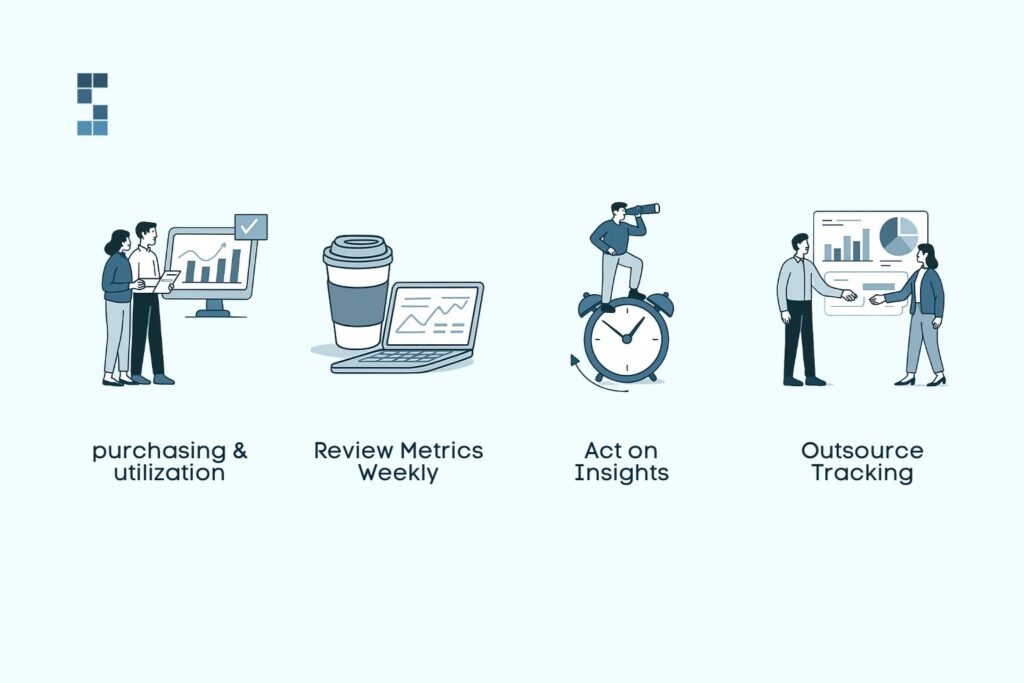
You don’t need to track everything on day one. Start with the two metrics that address your biggest worry right now, if you’re anxious about cash: track the collection period and pipeline coverage. If you’re worried about profitability, focus on project margins and utilization rate.
Master those for a month. Get comfortable with the rhythms, the patterns, what normal looks like for your firm. Then add complexity gradually. The goal isn’t a perfect measurement system—it’s a useful one.
Set up automated data feeds so you’re reviewing insights, not hunting for numbers across five different systems. Make Monday morning your metric ritual. Fifteen minutes, coffee in hand, dashboard open. What’s trending up, what’s trending down, what needs attention this week?
These aren’t just numbers on a screen. They’re your early warning system. They’re your strategic compass. They’re the difference between reactive scrambling and confident decision-making. Many consulting firms outsource this entire setup and ongoing tracking because it’s faster, more reliable, and, frankly, more cost-effective. After all, they’d rather spend their time on client work than building financial dashboards.
Your Financial Pulse, Strong and Steady
You can’t manage what you don’t measure. But you also don’t need to measure everything. These five metrics—utilization rate, collection period, project margin, pipeline coverage, and operating expense ratio—give you the visibility to make confident decisions instead of hopeful guesses.
“System Six has done wonders for my stress level,” one client told us. That’s what clarity does. It turns 2 am anxiety into Monday morning confidence. It turns scattered data into strategic insight. It turns “I hope we’re okay” into “I know exactly where we stand.”
What would change in your consulting firm if you had complete clarity on these five metrics every Monday morning? What decisions would you make differently? What problems would you catch early? What opportunities would you spot before your competitors?
Maybe it’s worth exploring whether automated financial tracking could give you back your weekends and your peace of mind. Your firm’s already generating all this data. The question is whether you’re using it to get ahead—or just falling further behind.
About System Six
System Six is a Seattle-based bookkeeping and financial services firm specializing in consulting and professional service businesses. Our team of 40+ professionals brings an average of 10+ years of accounting experience to every client relationship, serving over 175 companies across the U.S. We operate on a fixed weekly fee model with no long-term contracts because we believe in earning your business through consistent value delivery. Learn more at www.systemsix.com.

by Chris Williams | Aug 11, 2025 | Blog
It’s Tuesday afternoon, and the finance lead at a growing consulting firm is toggling between five browser tabs. A project manager needs updated billables. The managing partner wants this quarter’s burn rate. A client just flagged a duplicate invoice. The numbers are there, somewhere, but pulling them together feels like solving a puzzle.
This isn’t about disorganization. It’s the natural outcome of scaling faster than your financial systems. What used to work for a lean team starts breaking down when headcount increases and client demands grow more complex.
Most firm owners don’t notice the shift right away. But it shows up in the form of late nights, missed hours, and stalled decisions. Your team can’t forecast with confidence. And the tools that once felt flexible now feel fragile.
If this sounds familiar, it might be time to take a closer look at your financial systems. Not just how they function, but whether they can keep up with where your business is headed.
1. You’re Still Relying on Spreadsheets for Core Financial Workflows
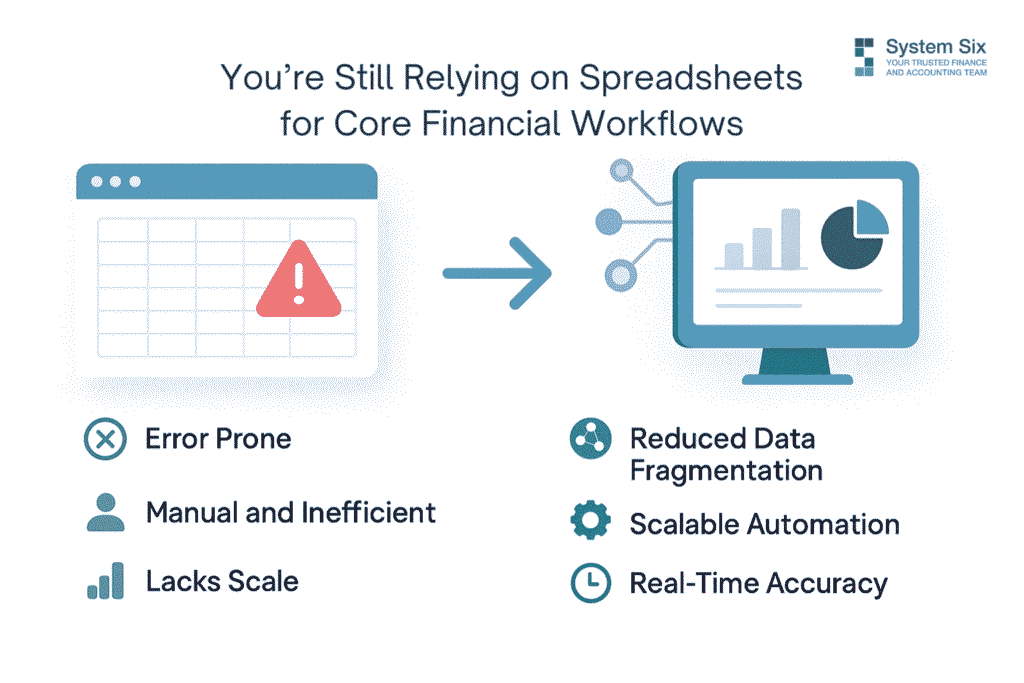
Spreadsheets often work well in the early stages. You can track expenses, create budgets, and monitor cash flow with enough customization to match your workflow. But as your consulting firm grows, those same spreadsheets start to limit visibility and delay decisions.
Every manual update increases the risk of error. A single misplaced formula or outdated data point can throw off forecasts, billing, and reporting. A study by PhysOrg found that nearly 94% of spreadsheets contain errors. When your financial systems rely on multiple linked spreadsheets, small mistakes tend to multiply.
Spreadsheets also slow things down. Data must be copied from one system to another before it becomes usable. You lose time double-checking numbers and chasing version control. This makes real-time insight almost impossible.
The more your business scales, the more touchpoints each financial process involves. One spreadsheet for client billing, another for cash flow, and a third for project profitability often means your team works harder to keep the numbers straight. That time could be spent on pricing strategies, margin analysis, or planning headcount.
Even when spreadsheets seem flexible, they cannot support the volume, complexity, or speed that scaling firms need. When financial accuracy depends on weekend maintenance or manual checks, the system has already outgrown its use.
Replace Manual Spreadsheets with Connected Financial Tools
Firms that grow without friction usually rely on systems that eliminate manual entry and reduce data fragmentation. When tools speak to each other, billing flows into forecasting, and expenses update reports in real time. This type of setup gives you a single source of truth that reflects the current state of your business.
Automation doesn’t mean giving up control. It means reducing the burden of repetitive updates so you can spend more time interpreting data instead of assembling it. Instead of reconciling spreadsheets before every meeting, you get financial reports that are already up to date.
Replacing spreadsheets with integrated systems also improves accuracy. Rules-based automation can categorize expenses, allocate billable hours, and flag inconsistencies long before they reach your clients or decision-makers. That clarity allows for faster approvals, cleaner audits, and stronger planning.
Firms that outgrow spreadsheets often need systems designed for scale. We help consulting firms move from spreadsheet-heavy workflows to connected tools that sync data across billing, forecasting, and reporting.
2. Billable Hours Are Falling Through the Cracks
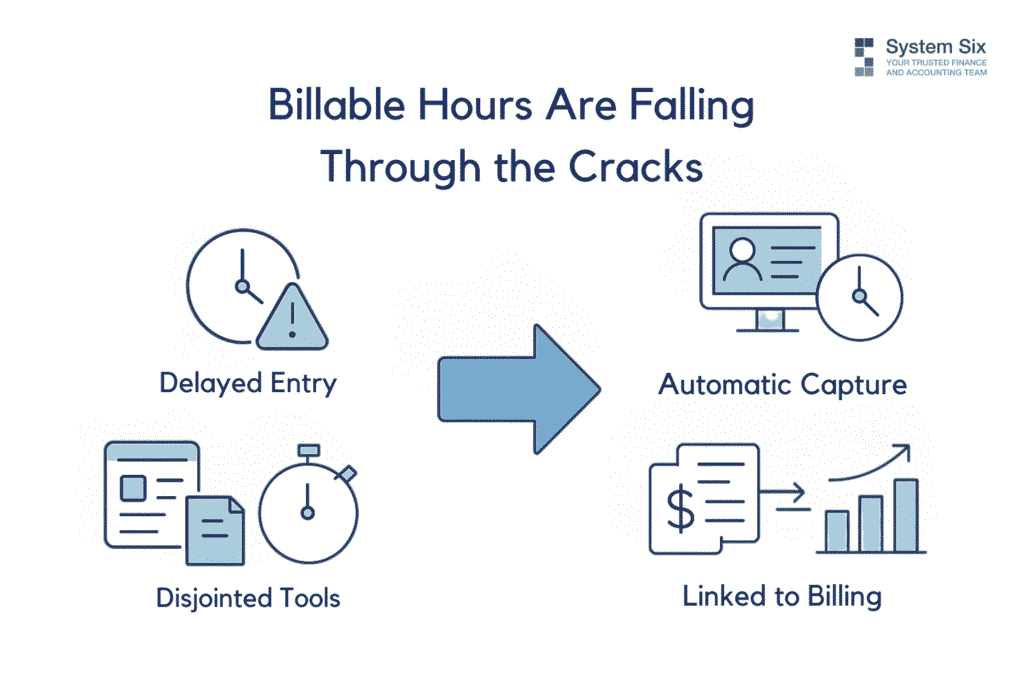
In a growing consulting firm, billable time often becomes harder to track. As projects scale and more team members contribute, hours slip through when time tracking depends on memory, manual logs, or disjointed tools.
Missed hours directly impact revenue. A study by ABA estimated that firms lose up to 50% of potential billables due to poor time tracking. That loss compounds when billing cycles rely on inconsistent inputs or when team members delay submitting time altogether.
When hours get recorded late, invoices go out slower. Revenue takes longer to reach your account. Over time, this delay affects your ability to forecast cash flow or reinvest in new work. Billing gaps can also erode client trust if invoices lack clear detail or include errors.
Firms often try to patch the process with spreadsheets or standalone trackers. But these tools rarely scale well. Hours get buried in email threads, inconsistent formats, or separate platforms. By the time everything is reviewed, your team has spent hours chasing data instead of doing billable work.
Stronger firms rely on integrated systems that simplify time capture and connect it directly to billing. Here’s what that looks like in practice:
- Time logs stay linked to client projects automatically. Team members enter hours within the same system used for project management or delivery. This ensures billable time is attached to the right client and task, without relying on memory or later clarification.
- Recorded hours flow directly into invoicing tools. When time entries sync with your billing system, you no longer need to copy and paste across tools or double-check spreadsheet formulas. Invoices can be prepared faster and reflect actual work completed.
- Systems flag gaps or low-entry days before invoices are sent. You get clear signals when a team member’s time log looks incomplete or falls short of expectations. This helps you catch missed hours early without having to audit manually.
- You gain better insight into profitability and planning. With cleaner time data, you can analyze how long projects actually take, spot clients with tighter margins, and make stronger decisions about pricing and staffing. That insight supports better resource allocation and long-term planning.
A system like this helps protect revenue without adding more administrative steps. It also frees your team to focus on project delivery instead of chasing down missing time.
Corporate cards that attach receipts to transactions in real time help ensure that project expenses align perfectly. This makes it easier to bill clients accurately and surface any missed costs before invoices go out.
3. Month-End Close Takes More Than a Week
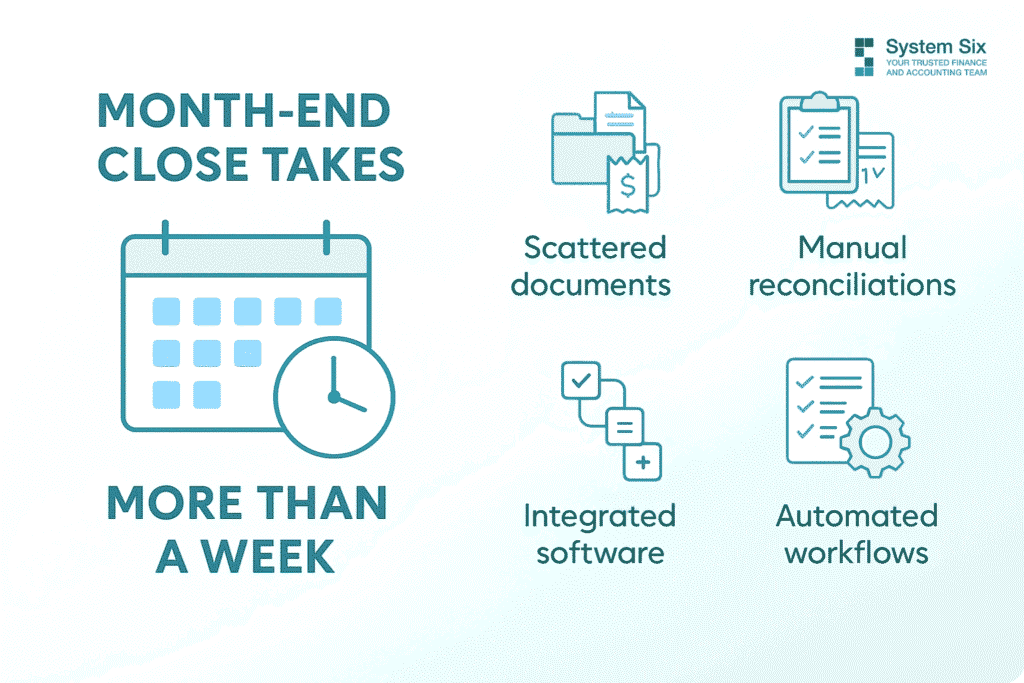
When your firm starts spending a full week or more closing the books, it usually points to deeper workflow problems. The delays often come from scattered data, manual reconciliations, and missing documentation. These bottlenecks grow worse as transaction volume increases or when multiple systems are not connected.
Every manual step adds risk. When receipts live in inboxes, invoices sit in drafts, or coding happens in bulk at the end of the month, the close process turns reactive. Errors creep in when teams rely on memory or rush through last-minute updates. Reviews take longer, and rework adds hours to every close.
Over time, a slow close limits financial visibility. Leadership decisions begin to lag behind actual performance. You lose the chance to correct course early or act on new opportunities while they are still relevant.
Build a Close Process That Runs in the Background
A faster close starts with structure. The goal is not to rush through the process but to spread the work evenly across the month. This means shifting from a reactive cycle to a continuous one where inputs, reviews, and reconciliations happen as the work gets done.
Integrated systems play a key role in making this possible. When your expense management, accounting software, and payroll tools talk to each other, you no longer depend on end-of-month scrambles to pull in data. Information flows in throughout the month and stays categorized from the start.
Rules-based automation supports consistency. Transactions get labeled the same way every time. Approvals follow the same path for every department. These steps reduce friction and make each close more predictable.
With the right setup, your month-end close becomes a reflection of how well your systems run, not a recurring fire drill that eats into every calendar cycle.
4. Forecasts Are Based on Gut Instinct And Not Real-Time Data
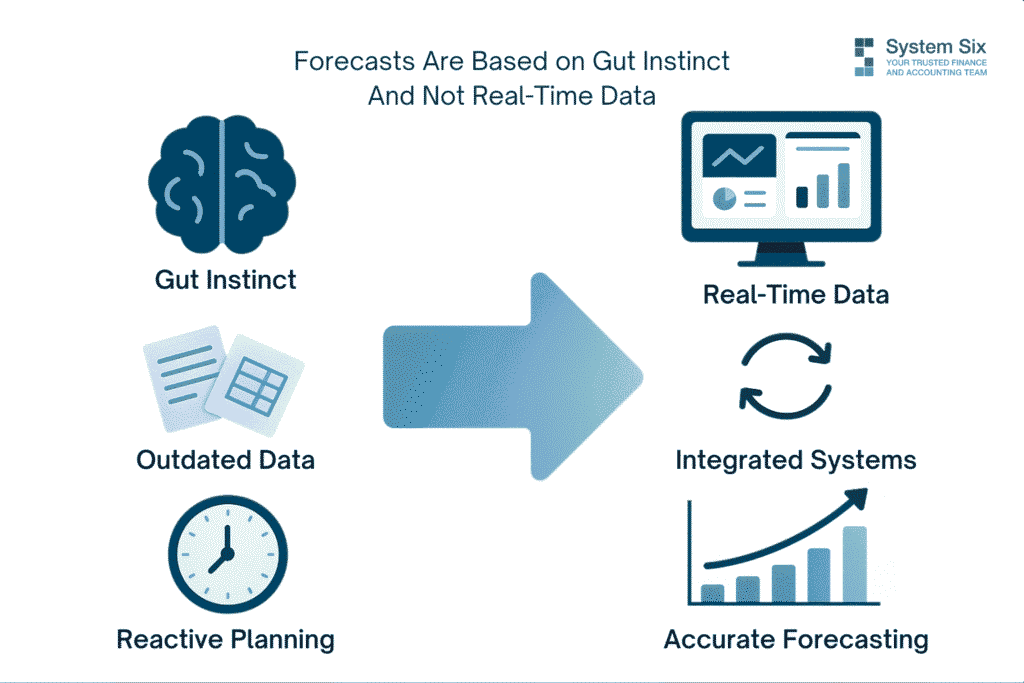
Strong forecasts rely on up-to-date numbers. But when financial inputs are scattered or delayed, many consulting firms default to intuition instead. Estimates are based on past experience rather than current conditions, and planning becomes reactive instead of intentional.
This disconnect often shows up in staffing, project timing, and cash flow. Without accurate forecasts, you risk overcommitting or underutilizing your team. You might delay a hire too long or take on too many projects at once. Each of these choices affects delivery, margins, and long-term growth.
In a CFO study, 43% of finance leaders said their forecasts often miss the mark because they rely on outdated or incomplete data. This gap makes it harder to respond to change, even when early signs are visible in your operations.
Manual data entry creates lag. By the time spreadsheets are updated, your numbers no longer reflect current activity. When forecasts are built on static reports, they can no longer support decisions that require speed or precision.
Build Forecasts That React to the Present
Accurate forecasting starts with systems that update as the business moves. Real-time data means your projections shift with actual performance rather than staying fixed until the next manual update.
When your financial systems connect directly to your CRM, project tools, and accounting software, forecasts begin pulling from live inputs. New contracts, delayed payments, and updated costs reflect instantly in your reports. This gives you a clearer view of revenue timing, upcoming expenses, and available capacity.
Predictive models become more reliable when built on structured data. Instead of basing forecasts on gut instinct, you can use historical patterns layered with current trends. This helps you plan with more confidence and less guesswork.
At System Six, we support firms with rolling cash flow forecasts and scenario planning tools that pull directly from live project and billing data. This helps leaders move from gut-driven decisions to data-backed planning.
When forecasts become a real-time tool rather than a periodic spreadsheet, you get faster answers to the questions that matter. This allows your firm to stay flexible and make decisions based on current circumstances, not just what happened last quarter.
5. Your Systems Can’t Scale with Headcount or Client Volume
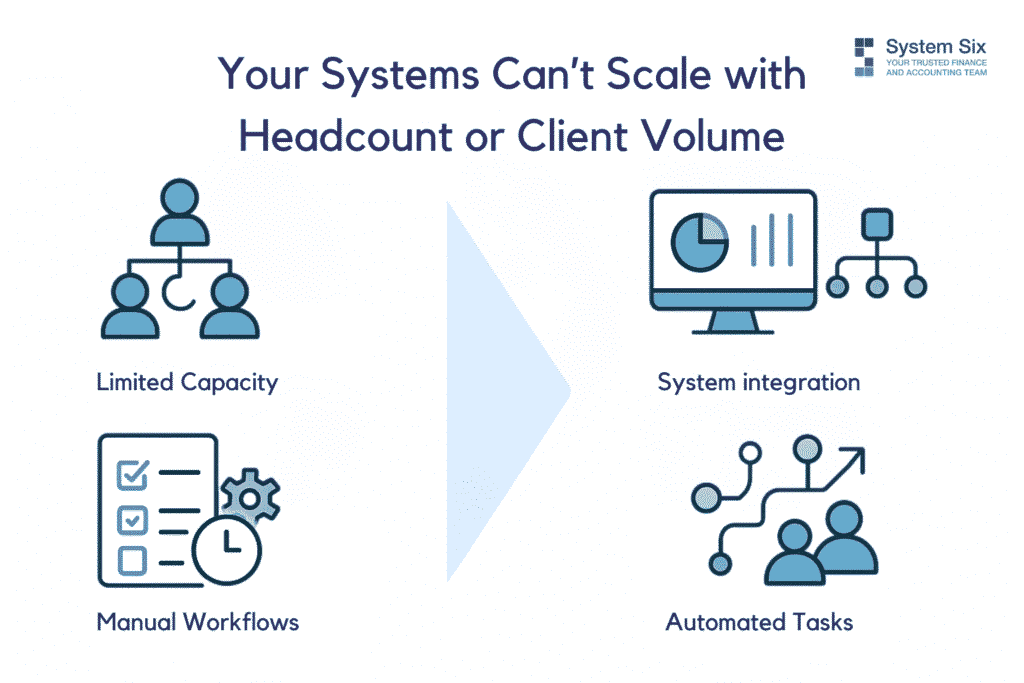
Growing firms face more complexity with each new client or hire. More projects increase the number of invoices, time entries, expenses, and financial reviews. Without the right systems, these moving parts begin to strain your team and delay core workflows.
Systems that worked for a five-person team often start breaking down once you reach ten. Processes built around manual entry or loosely connected tools become harder to manage. Work slows down as your team spends more time maintaining tools than serving clients.
You might notice approvals taking longer, project data becoming harder to reconcile, or reporting deadlines being missed. Each delay signals a system that can no longer keep pace with demand.
Cost of Reactive Fixes Versus Proactive System Design
When systems break under pressure, most firms respond with quick fixes. A new spreadsheet to track hours. Or another login for a billing tool. These short-term solutions often solve immediate issues but create more friction over time.
Reactive fixes add complexity and slow down your decision-making process. Proactive system design focuses on building workflows that hold up as your firm grows.
Here’s how the two approaches compare:
- Workflow structure: Reactive fixes create scattered processes that require extra steps and individual workarounds. Proactive systems standardize how work gets done, making it easier to train new team members and maintain consistency across projects.
- Data access: Reactive fixes rely on manual exports and spreadsheets that delay insight. Proactive systems pull live data from connected tools, giving you real-time visibility without additional work.
- Workload management: Reactive fixes increase administrative overhead and require frequent check-ins to stay on track. Proactive systems automate repetitive tasks, freeing up time for analysis and planning.
- Team knowledge: Reactive fixes often depend on a few people who know how to manage exceptions and workarounds. Proactive systems reduce this dependency by creating shared, transparent processes.
- Growth readiness: Reactive fixes fall apart under pressure as volume increases. Proactive systems scale alongside your business, so adding clients or team members does not require redesigning your workflows.
Build a Scalable Financial Stack That Supports Your Growth
Stronger firms invest in systems that grow with them. These systems handle more volume without adding more complexity. When your billing, expense, time tracking, and reporting tools are connected, your team can move faster with fewer errors.
A scalable financial stack reduces the number of decisions your team needs to make just to keep things running. Financial reports pull from a single data source. Invoices and time entries follow the same structure across every client.
The right setup gives your team structure without rigidity. As new clients come in or roles shift internally, your systems continue to support day-to-day work without disruption. This foundation allows your firm to focus on delivery and planning, not on fixing what broke behind the scenes.
Why Financial Systems Should Grow With You?
Financial systems that grow alongside your business create space for focus, speed, and control. As you take on more clients, launch new services, or expand your team, your workflows shift. A system that scales with those shifts gives your team the structure it needs to stay confident through change.
Growth introduces more decisions. Whether you are adjusting pricing, planning capacity, or reviewing profitability, those choices depend on timely, accurate information. A flexible system makes that information available without extra work. It updates with your business and reflects what is happening now, not what happened last quarter.
About System Six
System Six is a remote bookkeeping and financial services firm that helps small and mid-sized businesses streamline their financial operations. We specialize in providing technology-driven financial management solutions for consulting firms, allowing owners to focus on growing their businesses without worrying about cash flow, payroll, or compliance issues.
Our team of over 40 professionals brings an average of 10+ years of accounting experience to every client relationship, serving more than 200 businesses across the U.S. From accurate bookkeeping to cash flow forecasting, we deliver the financial clarity and peace of mind that consulting firm owners need to thrive. Learn more at www.systemsix.com.

by Chris Williams | Jul 25, 2025 | Blog
Elena closed her laptop with a frustrated sigh. It was 9 PM on Sunday, and she’d just spent two hours categorizing last week’s expenses for her management consulting firm. In the next room, her family was watching a movie together—the kind of simple evening she’d been promising herself she’d join once she “caught up” on administrative work.
But here’s what Elena didn’t realize: she wasn’t catching up on anything. She was trapped in a cycle of what I call “productive procrastination”—doing work that feels necessary and important but doesn’t require her unique expertise or judgment.
Think about it this way. Elena has fifteen years of strategic consulting experience, an MBA from a top-tier program, and deep expertise that clients pay $300 per hour to access. Yet she was spending her Sunday evening doing data entry that a computer could complete in seconds with greater accuracy than she could achieve manually.
This scenario illustrates a fundamental confusion that plagues most consulting firm owners: mistaking “being busy” with “being productive” when it comes to administrative tasks. The false economy of “doing it yourself” feels responsible, but it’s one of the most expensive mistakes you can make as a business owner.
Understanding automation isn’t about being lazy—it’s about recognizing that human intelligence should be directed toward activities that genuinely require human intelligence. By mastering these eight automation opportunities, you’ll transform weekend administrative tasks into quality family time while enhancing the accuracy and efficiency of your business operations.
Understanding the Automation Opportunity

Before we explore specific automation opportunities, let’s establish a clear learning foundation that will help you think systematically about administrative efficiency.
Automation functions like hiring a tireless assistant who never makes calculation errors, never forgets deadlines, and works around the clock without needing supervision or management. But understanding how to deploy this “assistant” effectively requires recognizing that administrative tasks fall into three distinct categories.
First, you have data processing tasks—activities such as expense categorization, invoice generation, and financial reporting — where you’re essentially moving information from one format or location to another. These tasks follow predictable rules and rarely require judgment calls, making them ideal candidates for automation.
Second, you encounter repetitive communication tasks such as client updates, meeting reminders, and progress reports. While these communications serve important relationship-building purposes, the actual process of creating and sending them often follows standard templates and timing patterns.
Third, you are responsible for compliance monitoring activities, including tracking tax deadlines, contract renewals, and regulatory requirements. These tasks are critical for avoiding penalties and maintaining good standing, but they primarily involve systematic tracking rather than complex decision-making.
Here’s a simple framework to guide your automation thinking: if you perform a task manually three times in essentially the same way, it’s likely automatable. This “Rule of Three” helps you distinguish between truly custom work that requires your judgment and routine processes that can be systematized.
I often encounter three common obstacles that business owners face when considering automation. The first is “I don’t have time to set up automation.” But consider this: if you spend two hours monthly on expense tracking, investing four hours to automate the process will pay for itself within two months and save you twenty hours annually in the future.
The second obstacle is “My business is too unique for standard automation.” While your services and clients may be unique, most administrative tasks follow remarkably similar patterns across consulting firms. Invoice generation, expense tracking, and compliance monitoring work the same way regardless of whether you’re a strategy consultant or an IT specialist.
The third obstacle involves technical intimidation: “Automation is too complicated for someone like me.” Modern automation tools are designed specifically for non-technical business owners. You don’t need programming skills—you need systematic thinking and patience to set up processes correctly.
To illustrate the transformation possible, consider a System Six client who reduced monthly administrative time from twenty hours to three hours through strategic automation. This wasn’t about expensive enterprise software or complex technical implementations. It was about systematically identifying repetitive manual work and replacing it with automated processes that run reliably in the background.
The 8 High-Impact Automation Opportunities

Let me walk you through eight specific automation opportunities, building from simpler implementations toward more sophisticated systems that will transform your administrative efficiency.
Expense categorization and receipt processing represent the most accessible starting point for most consulting firms. Manual expense sorting typically consumes two to three hours monthly, involving the tedious process of photographing receipts, entering amounts, and categorizing purchases according to your chart of accounts.
Modern expense automation tools can photograph receipts and automatically extract vendor information, amounts, and relevant categories with over 90% accuracy. The learning approach here involves starting with one expense category—perhaps office supplies or software subscriptions—before expanding to comprehensive automation. One System Six client reduced expense processing time from four hours monthly to fifteen minutes of review, redirecting those saved hours toward business development activities.
Invoice generation and payment tracking eliminate another significant time drain while improving cash flow management. Manual invoicing requires remembering different client billing cycles, accurately calculating project costs, and monitoring payment status across multiple accounts.
Template-based automation systems can generate invoices automatically based on time tracking data or project milestones, then monitor payment status and send follow-up reminders according to your preferences. Begin implementation with your most predictable clients—those on monthly retainer arrangements—before expanding to complex project-based billing. The typical time savings ranges from six to eight hours monthly on billing administration alone.
Accounts payable and bill management prevent the expensive errors that occur when vendor bills get overlooked or paid incorrectly. Manual bill tracking involves capturing invoices from various sources, routing them for approval, and scheduling payments to avoid late fees and duplicate payments.
Automated systems can capture bills electronically, route them through predefined approval workflows, and schedule payments automatically according to your cash flow preferences. Start with recurring monthly bills, such as rent, utilities, and software subscriptions, where the amounts and timing remain relatively predictable. This automation prevents late fees while enabling you to take advantage of early payment discounts.
Payroll processing and tax compliance eliminate the risk factors associated with manual wage calculations and regulatory compliance. Payroll errors create legal compliance issues, erode employee trust, and can lead to costly penalties from multiple government agencies.
Integrated payroll systems calculate wages, deductions, and tax withholdings automatically while maintaining compliance across different state requirements as your business grows. Begin with basic payroll automation before adding complexity, such as commission calculations or project-based bonuses. The outcome includes the elimination of payroll errors and automatic compliance reporting, which saves hours during tax season.
Client communication and project updates streamlines the ongoing relationship management that consumes significant time but follows predictable patterns. Keeping clients informed requires regular progress updates, scheduling meetings, and notifying them of milestones.
Automated communication systems can send project status emails, meeting reminders, and completion notifications based on project timelines and predefined triggers. Create templates for common communication scenarios, and then automate the delivery timing to ensure consistent client engagement without requiring manual coordination efforts. This builds client confidence through reliable communication while freeing your time for substantive client work.
Time tracking and project cost analysis addresses the revenue leakage that occurs when billable time gets forgotten or inaccurately recorded. Manual time tracking leads to undercharging clients and poor project profitability analysis.
Automated tracking systems capture billable time as you work and connect it directly to project budgets and client billing processes. Begin with simple time capture before incorporating sophisticated project analytics that display profitability trends and resource utilization patterns. The result is improved project profitability visibility and more accurate client billing that often increases revenue by five to ten percent.
Cash flow forecasting and financial reporting streamline the monthly financial close, transforming it from a multi-day process into an automated report generation. Understanding your financial position traditionally requires manually compiling data from multiple sources and creating reports that become outdated as soon as they are finished.
Automated reporting systems compile real-time financial dashboards that show cash position, accounts receivable aging, and profitability trends, updated continuously as transactions occur. Begin with basic cash flow tracking before developing comprehensive financial reporting that provides immediate visibility into business performance.
Compliance monitoring and deadline management eliminates the expensive penalties that result from missing tax deadlines, contract renewals, or licensing requirements. Manual deadline tracking relies on memory and calendar entries that can be overlooked during busy periods.
Automated compliance systems track requirements systematically and send alerts well in advance of deadlines, providing sufficient time to complete necessary actions without stress. Start with the highest-risk compliance areas, such as tax deadlines and insurance renewals, before expanding coverage to all regulatory requirements.
Implementation Strategy: Your Path Forward

Successful automation implementation requires a systematic approach that builds confidence through early wins, rather than overwhelming your current operations with too much change at once.
Begin by assessing and prioritizing opportunities for automation by tracking your administrative time for two weeks to identify the areas that have the highest impact. Use the “pain times frequency” calculation—tasks that are both painful to complete and occur frequently offer the best return on investment for automation. Focus initially on tasks that currently consume the most time or cause the most stress.
Start small and build confidence by choosing one automation project to prove the concept before expanding your efforts. I recommend starting with expense tracking or invoice generation, as they offer immediate, measurable time savings that demonstrate the value of automation. Master one system completely before adding complexity or additional tools.
The integration and scaling phase involves connecting your automated systems so that data flows seamlessly between processes—for example, linking time tracking to invoicing and project profitability reporting for complete workflow automation. Regularly review and refine your automated processes to maximize efficiency gains as you become more comfortable with the technology.
Measure your success through specific metrics, such as the time saved weekly, the number of errors reduced, and the improvement in stress levels. System Six clients typically see seventy to eighty percent reduction in administrative time within ninety days of implementation. View automation as an investment in your business capacity rather than just a time-saving tool.
Recognize when professional implementation will accelerate your results and provide better long-term outcomes. System Six specializes in helping consulting firms implement comprehensive automation strategies that typically pay for themselves within sixty to ninety days through time savings alone.
Your Transformation Starts Now

Administrative automation isn’t about mastering technology—it’s about applying strategic thinking to eliminate repetitive tasks that don’t require your unique expertise and judgment. Every hour you spend on automatable tasks represents an hour not spent on activities that only you can perform effectively.
Select your highest-impact automation opportunity from the eight we’ve explored and implement it thoroughly before proceeding to the next one. Measure your time savings and reinvest that recovered capacity into revenue-generating activities, such as cultivating client relationships, driving business development, and fostering strategic growth.
The goal extends beyond simply saving time. You’re redirecting your energy toward activities that leverage your professional expertise and create genuine business value. Imagine having fifteen to twenty extra hours each month to focus on the work that truly requires your consulting experience and strategic judgment.
Transform your administrative burden from a Sunday night obligation into automated background processes that run reliably and efficiently. At the same time, you focus on building the consulting practice you envisioned when you started your business.
About System Six
System Six is a Seattle-based bookkeeping and financial services firm that helps small and mid-sized businesses streamline their financial operations. We specialize in providing technology-driven financial management solutions for consulting firms, allowing owners to focus on growing their businesses without worrying about cash flow, payroll, or compliance issues. Our team of over 35 professionals brings an average of 10+ years of accounting experience to every client relationship, serving more than 175 businesses across the U.S. From accurate bookkeeping to cash flow forecasting, we deliver the financial clarity and peace of mind that consulting firm owners need to thrive. Learn more at www.systemsix.com.