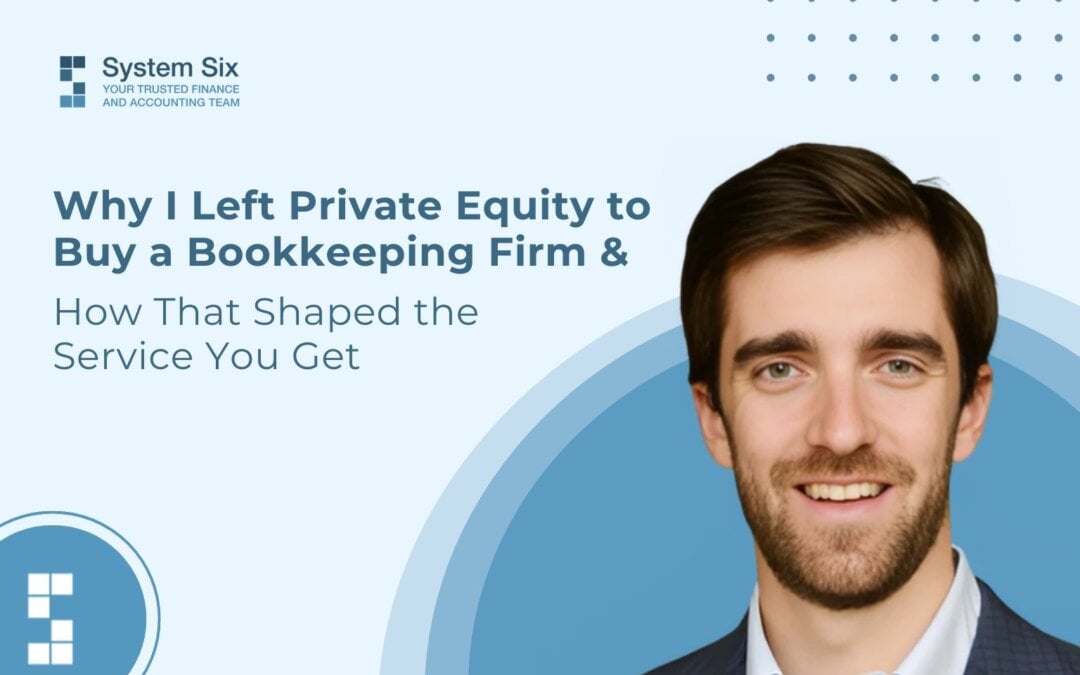
Most guides to outsourced bookkeeping are written by content marketers who have never closed a set of books. Mine is different, because I didn’t start in bookkeeping at all. I worked in real estate and then private equity, went to business school, spent a year searching for a company to buy, and in July 2021 I acquired System Six, an outsourced accounting and bookkeeping firm. I’ve run it ever since. So before I tell you what outsourced bookkeeping is, what it should cost, and how to pick a provider, let me tell you why I bought one in the first place — because that story is the reason we deliver the service the way we do.
A 20-minute conversation that changed what I wanted
When people ask when I knew I wanted to operate a business rather than invest in one, one moment comes back. I was inside one of our private-equity portfolio companies — a roughly 100-person business — helping put institutional and lender reporting in place for the first time. There was a woman named Melissa, mid-level on the finance and operations team.
I spent about twenty minutes talking with her — partly about the reporting, partly about her kids and her life. It sounds small. But I walked away realizing that the part of the job I actually cared about wasn’t the model or the transaction. It was being close enough to the people running the business to make their day better. In private equity, you rarely get that. You’re one step removed, and you move on to the next deal.
Why “who pays your salary” pushed me out of PE
There were good things about private equity, and good people in it. But I kept coming back to a structural problem: who is paying your salary actually matters. On a PE salary inside a portfolio company, there’s a quiet tension — the management team can feel like the costs you represent are being pushed onto them. I wanted to be on the same side of the table as the people I worked with, where my incentives and theirs pointed the same direction. The cleanest way to do that was to own the business, not advise it.
A year of searching, and the deal that stuck
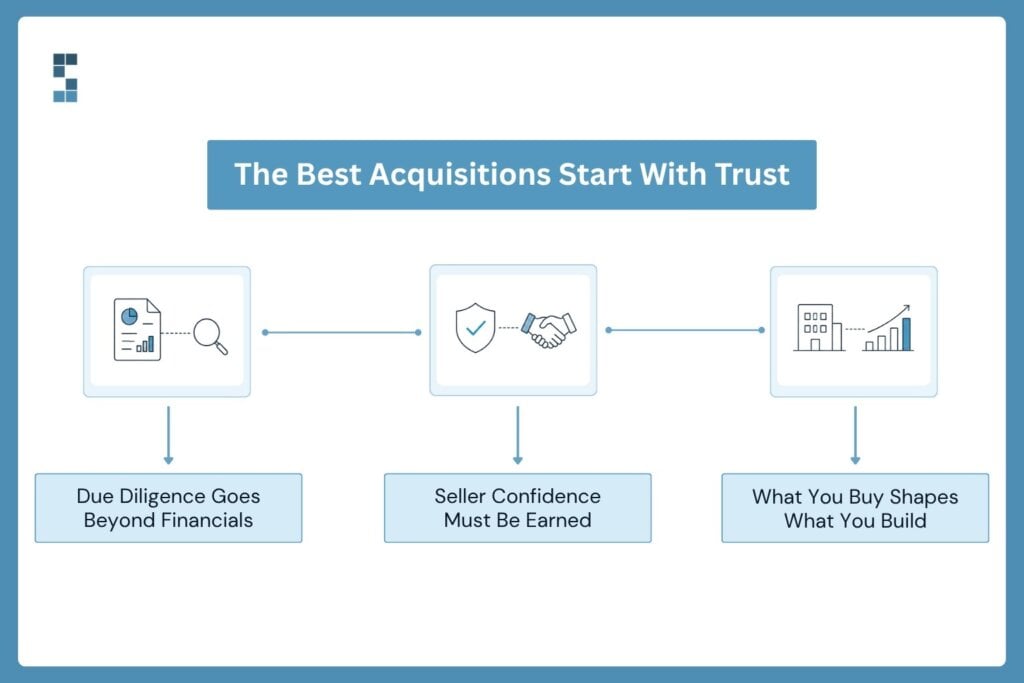
I started my search in the fall of 2020. It went the way most searches go: a few businesses I got excited about, letters of intent that fell through, stretches where nothing moved. Then System Six came together.
The part of that process I think about most wasn’t the diligence spreadsheet. It was a few days I spent in Michigan with the seller — hikes, a couple of nice meals, and his wife working through what I can only describe as a laundry list of questions for me. She grilled me, kindly but thoroughly, about my plans for the team and the first six months.
That happens a lot in the search-fund world, and it told me everything about the business I was buying. In a lot of ways they’d built the company together, they genuinely cared about their people, and they wanted to be sure I had the right intentions before they handed it over. I bought a firm where the team was the asset — and that has shaped every decision I’ve made since, starting with how we treat the clients who trust us with their books.
What I actually bought: a remote outsourced finance department
So, concretely: what does System Six do? At the core, we keep your books current and close them every month. That means recording transactions, reconciling accounts, and delivering financial statements on a fixed schedule. The point of a real monthly close is simple:
At the end of every month, you know what your revenue and your net income and EBITDA are, whatever type of business you’re in. You know what your metrics are that you’re paying attention to.
Chris Williams — Think Like an Owner
On top of that core, we take on the rest of the finance function that a small or mid-sized owner doesn’t want to live inside:
- Payroll processing
- Bill pay (accounts payable)
- Invoicing (accounts receivable)
- Sales and use tax filings throughout the year
- Integrating and automating the tools that connect all of the above
Anything else that falls into the traditional finance department that a small or medium-sized business owner honestly doesn’t want to do — process payroll, pay bills, send invoices — we’ll take that on and end up becoming a remote outsourced finance department for the businesses that we’re serving.
Chris Williams — Think Like an Owner
Just as important is what we are not. We are not a CPA firm: we don’t file your year-end taxes and we don’t do audit or attestation work. A good bookkeeping team works alongside your tax CPA and hands them clean books at year end — which usually makes that relationship cheaper, too.
Why I run System Six as a premium, white-glove provider
Bookkeeping has low barriers to entry. Anyone can start a bookkeeping business, and you can find providers at $300 or $400 a month, often with the work pushed offshore. I’m direct with every prospect about where we sit relative to that:
We’re intentionally a premium provider. We’re not the cheapest product on the market, and we own that and tell every prospect that. That means we need to make sure we’re delivering really good value.
Chris Williams — Acquiring Minds
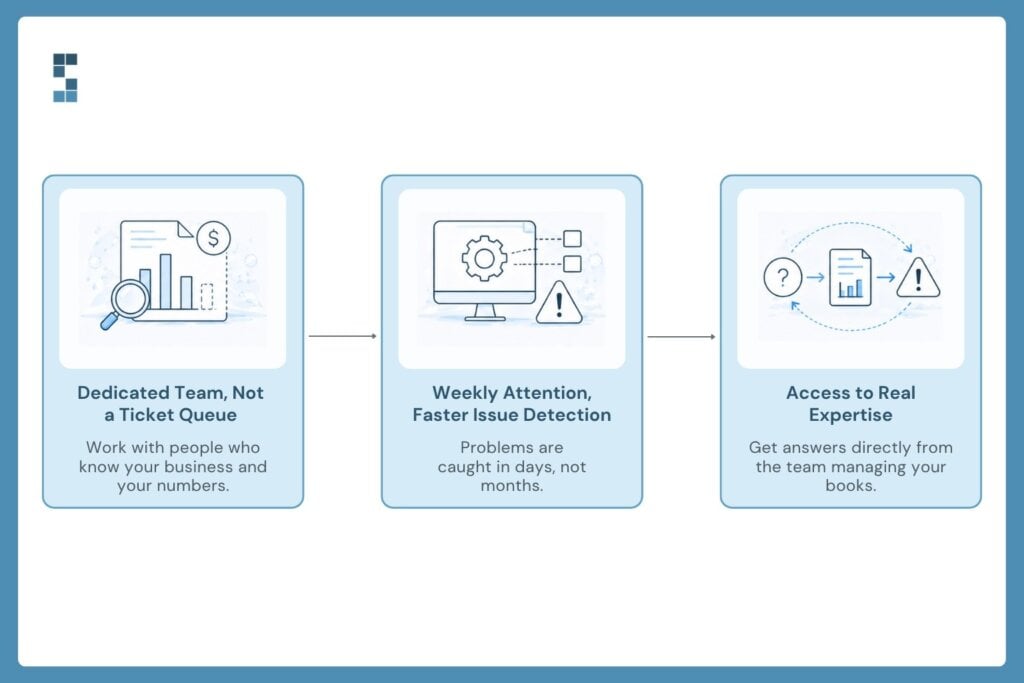
White-glove isn’t a tagline for us; it’s the whole reason I bought a people-first business instead of a cheaper, more automated one. In practice it means four things:
- A named, dedicated, US-based team that knows your business — not a rotating queue of anonymous preparers.
- Weekly attention to your books, not a once-a-month, after-the-fact cleanup. Issues get caught in days, not quarters.
- A real relationship: you can get your bookkeeper on a call, ask why a number moved, and get an answer from the person who closed it.
- Consultative onboarding: before we ever quote, we go into your books, dig through them, and ask questions. Trust is earned by demonstrated competence, not a pitch deck.
Here’s how I know that promise is real rather than aspirational. We run an NPS survey — on a zero-to-ten scale, how likely are you to recommend us — across both our clients and our own team, and we do new-client check-ins a few months in. I don’t lead with the score, because the score isn’t the point; it’s just the evidence. The point is that the people closing your books are treated like owners themselves.
That last part is deliberate. We do Christmas bonuses and profit sharing, because the reason to own a small business is to build a place where people can grow a career and have balance in their lives. A team that’s treated like owners brings an owner’s care to your numbers. You feel that in the books.
How the work actually gets done (without the buzzwords)
Modern bookkeeping is a service business run on software rails: QuickBooks Online or Xero at the center, bank feeds and automations configured properly, and purpose-built tools connected around them.
We do a lot of point of sale data — download it, scrape it, transport it into QuickBooks… As low-code deploys more through the ecosystem, we’re going to use things like Airtable and Zapier for our clients.
Chris Williams — Think Like an Owner
The principle we run on: automation does the moving, humans do the judging. Tools fetch, categorize, and reconcile the routine 80%; a trained bookkeeper reviews everything and handles the 20% where judgment matters. Any provider who tells you it’s all automated is describing the error rate you’ll discover later.
How I’d evaluate any provider, including us
If you’re shopping for outsourced bookkeeping, here are the questions I’d ask anyone — us included:
- Who exactly will touch my books, and where are they located?
- Do I get a dedicated team, and what happens when my bookkeeper is out?
- Can you do accrual accounting, and can I see an example close checklist?
- How often are my books touched — weekly or once a month?
- Who reviews the work before I see it?
- How do you handle payroll, bill pay, and invoicing, and what tools do you use?
- How will you work with my tax CPA at year end?
- Will you look at my books before you quote?
- What’s the contract term, and how do I leave if it isn’t working?
- Can I talk to two clients my size, in my industry?
Start with your books, not a pitch
I bought this company because of a twenty-minute conversation that reminded me what I actually wanted from work: to be close to the people I serve and genuinely useful to them. That’s still how we sell, and how we operate.
So if you’re evaluating outsourced bookkeeping, don’t start with a sales call. Start with your books. Give us read access, and we’ll come back with what we see, what we’d fix, and exactly what it would cost — and you’ll meet the dedicated team you’d actually work with, not a salesperson. Book an intro call with System Six.
About System Six
System Six is a Seattle-based bookkeeping and financial services firm that helps small and mid-sized businesses streamline their financial operations. We specialize in providing technology-driven financial management solutions for consulting firms, enabling owners to focus on growing their businesses without worrying about cash flow, payroll, or compliance. Our team of over 40 professionals brings an average of 10+ years of accounting experience to every client relationship, serving more than 175 businesses across the U.S. With a 9.5/10 NPS score, we deliver the financial clarity and peace of mind that consulting firm owners need to thrive. Learn more at www.systemsix.com.