It’s 9:47 on a Thursday night. Rachel, who runs a 22-person consulting firm in the Pacific Northwest, has the kids asleep, a glass of wine poured, and QuickBooks open on her laptop. Again. She’s reconciling with June. It’s October. Her current bookkeeper is fine, technically. Nothing’s on fire. But nothing’s clean either, and Rachel has been thinking about switching for almost a year.
She hasn’t pulled the trigger. Why? Because switching feels like surgery. You’re convinced the operation will fix the thing that’s been bothering you, but you’re equally convinced it’ll leave you worse off before it leaves you better.
Here’s the secret nobody tells you: that story is mostly wrong. The real switch looks nothing like the disaster you’ve been picturing. Let’s walk through what actually happens, week by week, so the next time you find yourself at the kitchen table at 10 p.m., you can stop debating and start deciding.
The Fear Is Doing Most of the Work
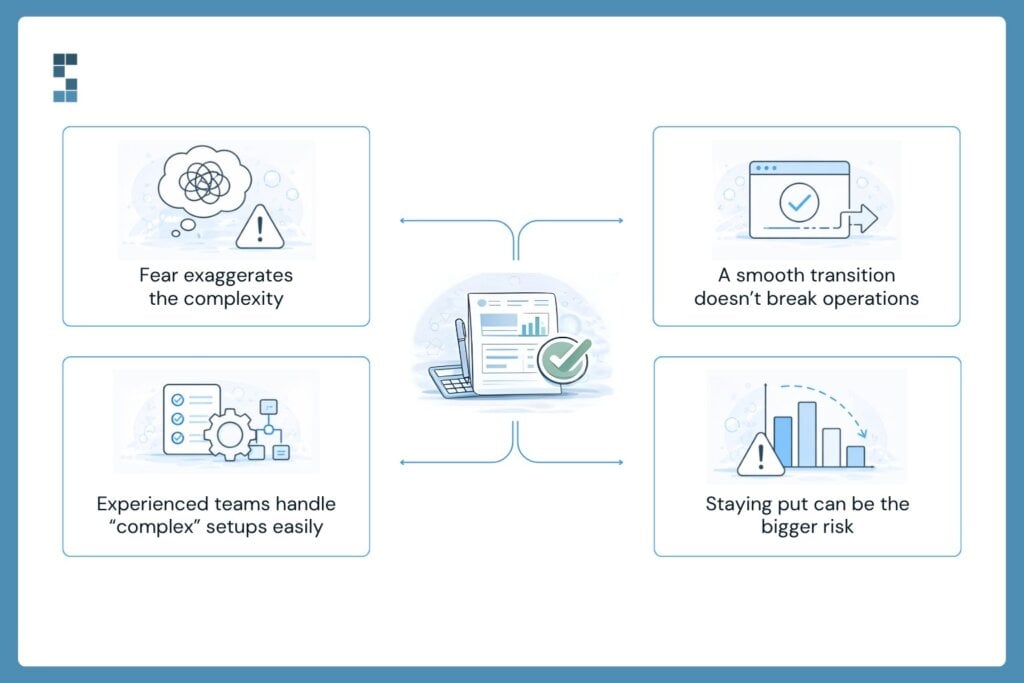
Ask ten consulting firm owners why they haven’t switched bookkeepers yet, and you’ll hear some version of the same thing. “It’ll take forever to get them up to speed.” “What if they mess up payroll?” “My current person knows all our weird stuff — the retainer math, the expense reimbursements, the contractor 1099s.” Sound familiar?
None of these worries is crazy. They’re just bigger in your head than they are in reality. A well-handled switch looks more like hiring a new operations lead than like demolishing your house. Your data doesn’t disappear. Your vendors don’t get confused. Your team keeps getting paid. And the “weird stuff” you’ve been explaining for years? A good bookkeeping team has seen it all before, usually in ten other firms just like yours.
One System Six client, Manish G., described his experience bluntly. After his previous freelance bookkeeper left him with misfiled payroll taxes and an invoicing mess, he was convinced things couldn’t get worse, and certain switching would at least be painful. Instead, the new team — in his words — literally saved my business from falling into operational ruins. The part he expected to hurt turned out to be the easiest step he’d taken all year.
So what does that step actually look like?
Weeks One Through Four: Foundation and Stabilization
The first month has one job: take the weight off your shoulders. On day one, a dedicated team takes over your monthly bookkeeping, bank reconciliations, and payroll processing. You don’t hand over a thumb drive and hope for the best. You get a kickoff call, a document checklist, and someone who actually owns the migration from end to end.
The kickoff itself is less dramatic than you’d expect. Usually, a 45-minute call, a shared folder, read-only access to your existing systems, and a short list of things they need from you — bank statements, a copy of your current chart of accounts, a list of vendors and contractors, and any payroll history. That’s most of it. You’re not spending your weekend pulling files.
Behind the scenes, a lot happens quickly. If you’re already on QuickBooks Online, the transition typically wraps up in 2 to 3 weeks. If you’re migrating from desktop QuickBooks, Xero, or — let’s be honest — a spreadsheet held together with hope, expect about four weeks. Your chart of accounts gets optimized for how consulting firms actually work: projects, retainers, milestone billing, and expense reimbursements. Bank feeds connect. Bill-pay tools like Ramp get wired up. Payroll moves onto whichever platform makes the most sense for your team, whether that’s Gusto or something you already use.
Here’s the part that surprises most firm owners. While all of this is happening, almost nothing about your day changes. Your team still gets paid on time. Your vendors still get their checks. Clients still get invoices. You just stop being the bottleneck.
If your books have been messy for a while — most are — there’s also a cleanup phase happening in parallel. Prior-month reconciliations get caught up. Miscategorized expenses get sorted. Orphaned transactions get chased down. None of this lands on your desk. You get a summary at the end of the month showing what was found and fixed, and the books quietly become something you can actually trust.
By the end of week four, you have clean books, automated workflows humming quietly in the background, and — maybe for the first time in years — a dashboard that shows you where you actually stand.
Months Two and Three: The Good Part
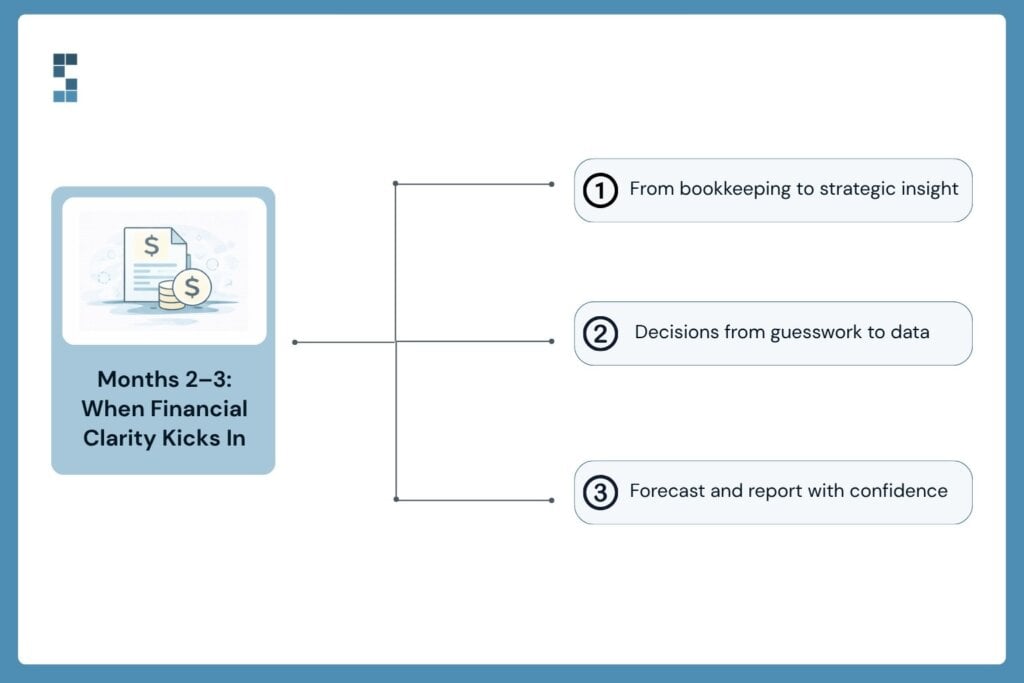
Once the foundation’s in, the real value shows up. This is where the firm you hired stops feeling like a vendor and starts feeling like a finance team.
Project-based profitability tracking gets layered in. If you use Harvest or Asana for time and project management, they integrate with your accounting, so you can finally see which engagements make money and which quietly eat partner hours. Cash flow forecasting extends out twelve months. Monthly reporting starts arriving on a schedule you don’t have to chase.
One environmental consulting firm went through exactly this sequence. By month three, they could see — for the first time — that their mid-sized engagements were 40% more profitable than the big flagship projects they’d been chasing. That single insight reshaped their entire business development strategy. It also, as the founding partner put it, paid for the service several times over in the first year alone.
What does this mean for you? You stop making strategic decisions on gut feel. You know what to price higher. You know who to hire next. You know when to say no.
What It Actually Costs to Not Switch
Here’s the part nobody likes to talk about. Every month you don’t make the change, you’re paying for it, just not in invoices.
Consulting firms working with System Six save roughly 15 hours a month on financial administration. At a partner billing rate of $250 an hour, that’s $45,000 a year in reclaimed time. Multiply that by the years you’ve been thinking about switching. The number gets uncomfortable fast.
And it’s not just hours. It’s the client proposal you didn’t write because you were chasing a missing receipt. It’s the hire you delayed because you couldn’t tell whether the firm could afford the new seat. It’s the Friday nights.
JT C., a long-time client, put it this way: had I only switched sooner, I am sure my business outcomes would have been substantially different. Over 95% of System Six’s consulting clients renew year after year, which tells you something important. Once firms feel what clean books and reclaimed evenings actually feel like, going back isn’t on the table.
The Real Takeaway
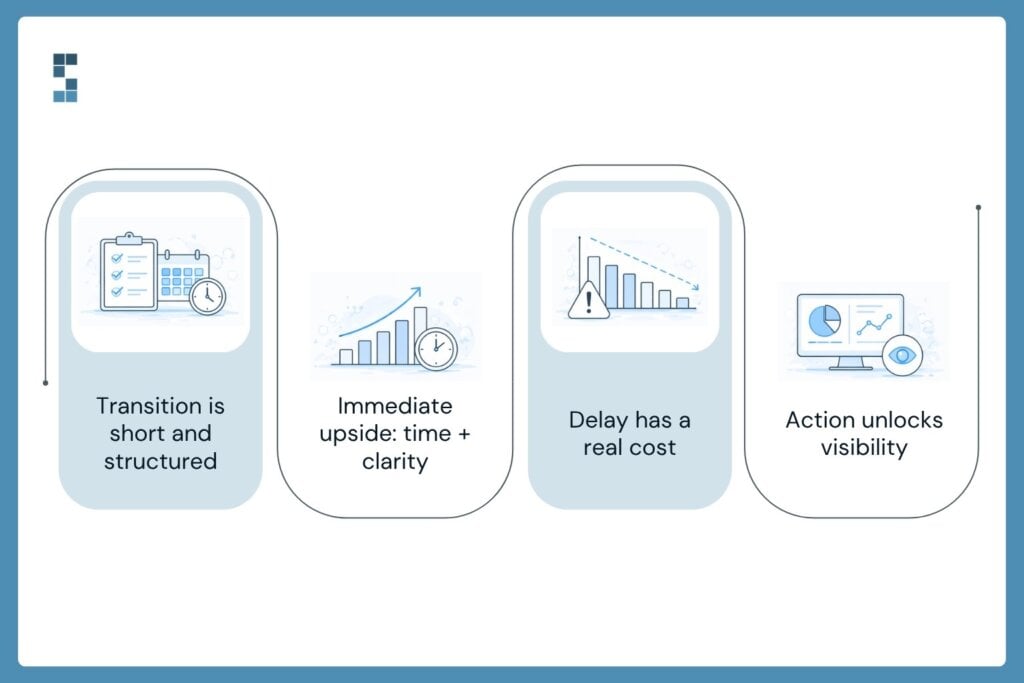
Switching bookkeeping providers isn’t the operation you’ve been picturing. It’s four weeks of structured, mostly invisible work that ends with your evenings back, your data clean, and your strategic questions finally answerable.
The question isn’t whether the switch will hurt. It won’t. The question is how many more Thursday nights at the kitchen table you’re willing to trade for a decision that, six weeks from now, you’ll wish you’d made a year ago.
Ready to see what your transition would actually look like? A complimentary consultation walks you through your current setup, identifies what changes are needed, and shows you a realistic timeline. No pressure, no surprises. The hardest part really is deciding to have the conversation.
About System Six
System Six is a Seattle-based bookkeeping and financial services firm that helps small and mid-sized businesses streamline their financial operations. We specialise in providing technology-driven financial management solutions for consulting firms, enabling owners to focus on growing their businesses without worrying about cash flow, payroll, or compliance. Our team of over 40 professionals brings an average of 10+ years of accounting experience to every client relationship, serving more than 175 businesses across the U.S. With a 9.5/10 NPS score, we deliver the financial clarity and peace of mind that consulting firm owners need to thrive. Learn more at www.systemsix.com.