Picture this. It’s Sunday evening, and you’re sitting at your kitchen table surrounded by a small mountain of receipts, printed invoices, and bank statements. You’ve got a shoebox of expense slips from last quarter that still need sorting. There’s a filing cabinet in your office that hasn’t closed properly in months. And somewhere in that pile is a vendor receipt you need for client reimbursement—but good luck finding it.
Sound familiar? If you’re running a consulting firm, your financial paperwork looks something like this. And here’s the thing most people miss: all that paper isn’t just cluttering your office. It’s quietly draining your budget, eating your time, and introducing errors you won’t catch until tax season.
Going paperless isn’t some trendy sustainability gesture. It’s a financial strategy. And for consulting firms trying to stay lean and profitable, it might be one of the smartest moves you make this year. Let’s walk through why — and how to actually do it without losing your mind.
The Hidden Price Tag of Paper-Based Processes
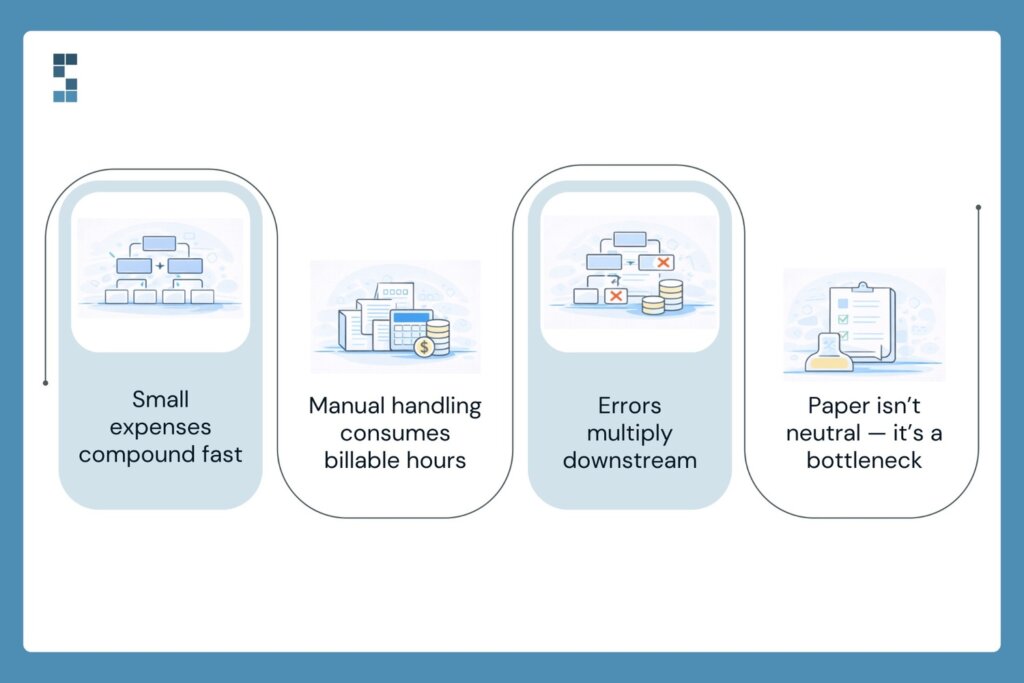
The obvious costs of paper are easy to dismiss. Printer ink, copy paper, postage, and filing supplies — none of those line items look alarming on their own. But they add up faster than you’d expect, especially when you factor in the storage space those filing cabinets occupy in your office. Real estate isn’t cheap, and dedicating square footage to old bank statements is a lousy use of it.
But the real expense? It’s your time.
Think about what happens every time a paper receipt enters your workflow. Someone has to collect it. Someone has to enter the data manually. Someone has to file it in the right folder, match it to the right project, and hope they didn’t transpose a digit somewhere along the way. Multiply that process across dozens of transactions every week, and you’re looking at hours of work that produce zero revenue.
Most consulting firm owners spend somewhere between 10 and 15 hours every week on manual financial tasks. At typical consulting rates, that’s $2,000 to $3,750 in billable time — gone. Every single week. Not because the work is complex, but because the process is inefficient.
And then there’s the error problem. Manual data entry introduces mistakes at predictable rates, and those mistakes don’t stay contained. One wrong number on an expense report cascades into your project profitability calculations, your tax filings, and sometimes your client invoices. Fixing those errors often takes longer than the original task.
Paper isn’t just clutter. It’s a bottleneck that’s costing you more than you realize.
What Paperless Accounting Actually Looks Like
Here’s where people get tripped up. “Going paperless” sounds like flipping a switch — one day you have paper, the next day you don’t. But that’s not how it works, and honestly, that all-or-nothing thinking is what keeps most firms stuck.
Think of it more like installing plumbing. Right now, you’re essentially carrying water from a well every time you need it — manually hauling data from one place to another, printing things so you can look at them, filing documents so you can find them later. Paperless workflows create direct connections between your systems so information flows automatically, without you having to touch it.
In practice, that means a few key changes—first, digital receipt capture. Instead of stuffing paper receipts into envelopes, you snap a photo with your phone, and the system extracts the vendor, amount, and category automatically — with over 90% accuracy. Second, cloud-based document storage replaces your filing cabinets entirely. Every invoice, contract, and statement lives in a searchable digital system. No more digging through folders for twenty minutes to find one document.
Then there’s automated transaction categorization, which handles the tedious work of sorting expenses into the right accounts. Electronic invoicing with built-in payment reminders replaces the old routine of creating invoices in Word, emailing them manually, and then chasing payments with awkward follow-up calls. Digital approval workflows mean expense reports get routed, reviewed, and approved without a single piece of paper changing hands.
One System Six client described the shift perfectly — they went from spending Sunday afternoons wrestling with bookkeeping to reviewing automated reports for about 15 minutes on Monday mornings. That’s not a minor improvement. That’s a fundamentally different way of running your back office.
The ROI of Going Green With Your Books

So what does all this actually save you? Let’s talk numbers, because this is where paperless accounting stops being a nice idea and starts being a no-brainer.
Start with time. Consulting firms that implement automated, paperless financial workflows typically see a 70 to 80 percent reduction in the hours they spend on financial management — and many hit that milestone within 90 days of making the switch. If you’re currently burning 15 hours a week on manual processes, you could realistically get that down to three or four.
Accuracy improves dramatically, too. Automated categorization doesn’t get tired at 9 PM and accidentally code a software subscription as office supplies. It doesn’t transpose numbers. It doesn’t lose receipts. One firm that made the switch to System Six cut its expense processing time by 80% and virtually eliminated lost receipts overnight.
Cash flow speeds up in ways you can feel. When you move from manual invoicing to automated billing with built-in payment reminders, clients pay faster. One consulting firm saw its average collection time drop from 45 days to 22 days. That’s not a marginal improvement — that’s the difference between comfortable cash flow and constantly checking your bank balance.
And the compliance headaches? Gone. Automated deadline tracking handles tax filings, contract renewals, and regulatory requirements without relying on your memory or a spreadsheet you might forget to check. As one business owner put it after working with System Six, they no longer worry about compliance because it’s all handled automatically.
Here’s where the math gets exciting. Say you bill $200 an hour and you’re spending 10 hours a month on manual, paper-heavy financial tasks. That’s $24,000 a year in opportunity cost — revenue you could’ve earned but didn’t. One firm that reclaimed those hours redirected the time toward client work and business development. They grew 40% the following year without adding a single administrative hire.
For most consulting firms, the break-even point for going paperless lies between 2 and 3 months. First-year ROI often exceeds 300%. It’s hard to find many business investments with that kind of return.
Getting Started Without the Overwhelm
I get it — the idea of overhauling your financial processes sounds exhausting when you’re already stretched thin. But here’s the good news: you don’t have to do everything at once.
Pick one area. Expense tracking and receipt management are usually the easiest wins, because the pain is obvious and the improvement is immediate. Master that system, measure your time savings, and then expand from there. Before you start, spend two weeks tracking how much time you actually spend on paper-based financial tasks. That baseline will show you exactly where the biggest opportunities are — and it’ll motivate you when you see the before-and-after.
If you want to accelerate the process, professional implementation makes a real difference. System Six specializes in helping consulting firms build paperless financial workflows, and most firms are fully operational within four weeks. Their automation strategies typically pay for themselves within 60 to 90 days, driven solely by time savings.
Your Paper Trail Doesn’t Have to Be Literal
Going paperless isn’t really about saving trees — though that’s a nice bonus. It’s about reclaiming your time, eliminating the errors that come with manual processes, and building financial systems that actually scale as your firm grows. It’s about spending your Monday mornings on strategy rather than data entry, and your Sunday evenings on whatever you want rather than sorting receipts.
What would you do with an extra 15 hours every month?
About System Six
System Six is a Seattle-based bookkeeping and financial services firm that helps small and mid-sized businesses streamline their financial operations. We specialize in providing technology-driven financial management solutions for consulting firms, enabling owners to focus on growing their businesses without worrying about cash flow, payroll, or compliance. Our team of over 40 professionals brings an average of 10+ years of accounting experience to every client relationship, serving more than 175 businesses across the U.S. With a 9.5/10 NPS score, we deliver the financial clarity and peace of mind that consulting firm owners need to thrive. Learn more at www.systemsix.com.