
Picture this. You’re sitting across from a prospective investor. Your consulting firm has a strong team, happy clients, and a growing pipeline. Everything feels right. Then they ask to see your financials.
You slide a basic profit-and-loss statement across the table. It’s accurate. The numbers add up. But within seconds, you can feel the energy drain from the room. Their eyes glaze over. The conversation shifts from “when can we start?” to “we’ll be in touch.”
The problem wasn’t your numbers. It was the absence of a story around them.
Financial storytelling—the art of turning raw data into a narrative that investors actually care about—is one of the most overlooked tools in a consulting firm owner’s toolkit. And it’s not about spin or exaggeration. It’s about context, clarity, and confidence. Firms that master this skill don’t just attract capital. They build the kind of professional reputation that opens doors for years to come.
Your Numbers Already Have a Story. You’re Just Not Telling It.
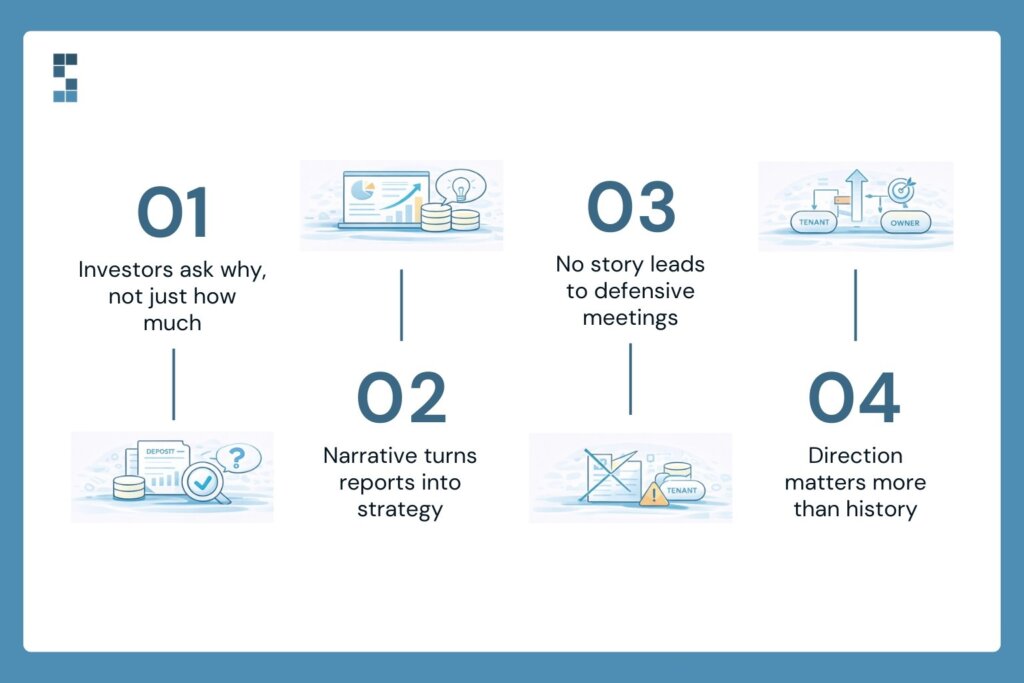
Here’s the thing most consulting firm owners get wrong about financial reports: they treat them like a homework assignment. Something to check off the list. Accurate? Yes. Useful to an investor? Not even close.
Raw numbers without narrative are like a novel with no plot. You’ve got characters and settings, but no one knows what’s happening or why they should care. An investor doesn’t just want to know that your revenue grew 18% last year. They want to know why it grew, whether that growth is repeatable, and what you’re doing to sustain it.
That’s what financial storytelling is. It’s the difference between a spreadsheet that lists figures and a report that paints a trajectory—one that shows where you’ve been, where you are, and where you’re confidently heading next.
And here’s what happens when the story is missing. Poor financial reporting undermines investor confidence. Board meetings become defensive exercises instead of strategic planning sessions. You spend the whole conversation explaining your numbers rather than discussing your vision.
When was the last time you looked at your own reports through an investor’s eyes? If the answer makes you uncomfortable, you’re not alone. Most consulting firms produce basic P&Ls that don’t support the kind of conversations investors want to have.
What Actually Goes Into an Investor-Ready Report
So what separates a report that gets filed away from one that gets an investor to lean forward in their chair? It comes down to a handful of elements that most firms overlook.
First, variance analysis. This is the “what changed and why” layer. Did your margins dip last quarter? A basic report shows the dip. An investor-ready report explains it—maybe you invested in a new hire who’s already billing at full capacity, or you expanded into a new market that hasn’t matured yet. Context transforms a red flag into a strategic decision.
Second, KPI tracking is tied to actual goals. Investors want to see that you’re measuring the things that matter—not just revenue and expenses, but utilization rates, client retention, project profitability, and pipeline health. These are the vital signs of a consulting business, and they tell a much richer story than a top-line number ever could.
Third, cash flow forecasting. Nothing signals forward thinking like a 12- or 18-month cash flow projection. It tells investors you’re not just reacting to what’s in front of you—you’re planning for what’s around the corner.
And finally, strategic commentary. This is where the real storytelling lives. Brief narratives alongside the numbers that connect the dots: here’s what we did, here’s what happened, and here’s what we’re doing next. It’s the difference between handing someone a map and actually walking them through the territory.
One client put it this way after transforming their reporting: “We just finished our audit, and the auditors found exactly zero errors. Not only have they been mistake-free, but they’ve also been proactive at catching mistakes I’ve made and seeing challenges coming down the pike.” That kind of precision isn’t just nice to have. It’s the foundation on which financial storytelling is built. You can’t tell a compelling story if the underlying data is shaky.
And here’s something worth noting: investor-ready reports aren’t just for firms chasing outside capital. They sharpen your own decision-making. They reinforce your professional reputation with clients, partners, and lenders. They reduce the financial anxiety that keeps firm owners up at night, wondering whether they’re making the right calls.
How to Start Telling Your Financial Story Today
The good news? You don’t need to become a CFO overnight. But you do need to start somewhere. And the place to start is simpler than you might think.
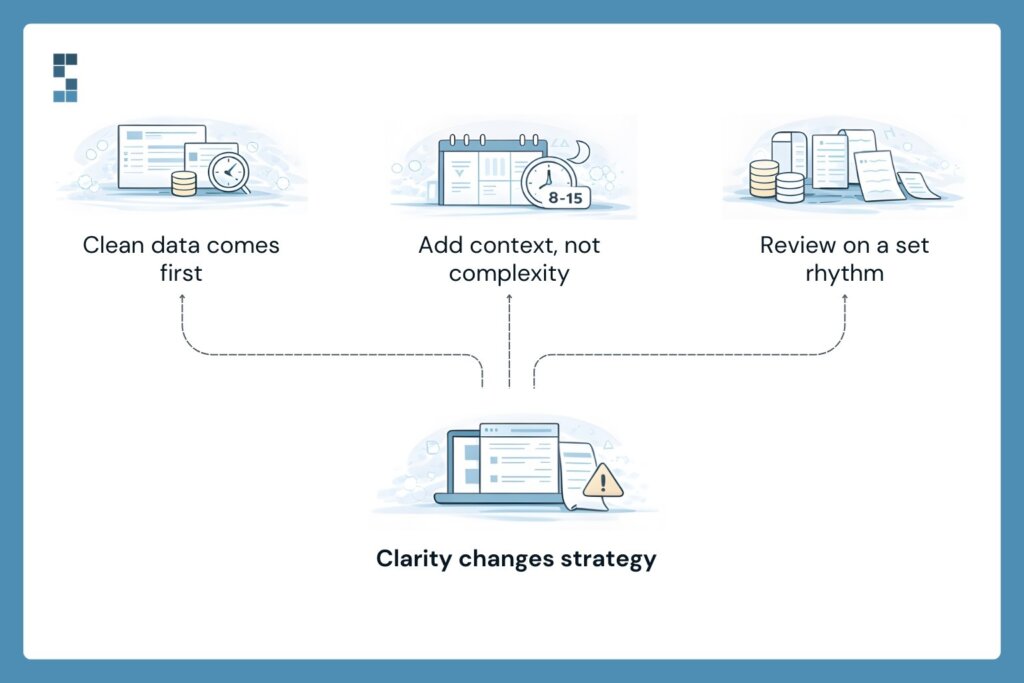
Get the foundation right first. Financial storytelling falls apart without clean, consistent data. That means addressing the boring-but-essential stuff: consistent time tracking, timely expense reporting, and accurate project coding. If your team is logging hours inconsistently or submitting expenses three weeks late, no amount of narrative polish will save your reports.
Once the data is solid, start layering in context. Add variance analysis to your monthly reports. Include trend lines that show three-, six-, and twelve-month trajectories. Write two or three sentences of strategic commentary for each major section. You’d be surprised how much a few lines of “here’s what this means” can transform a dense spreadsheet into a document that actually communicates something.
Then establish a rhythm. Different reports require different cadences: daily cash position checks, weekly utilization reviews, monthly profitability deep dives, and quarterly strategic assessments. This structure isn’t just for investors—it’s for you. It creates the kind of financial clarity that enables confident decisions.
One environmental consulting firm discovered this firsthand. After rebuilding their reporting systems, they finally gained visibility into which parts of their business were actually making money. The result? A 40% improvement in reporting accuracy, a 22% margin improvement, and the confidence to expand into their most profitable service areas. As they put it: “We had no idea which parts of our business were actually making money until we rebuilt our reporting.”
That’s the power of financial storytelling in action. It doesn’t just impress investors. It transforms how you run your firm.
The Story Your Numbers Tell
Let’s go back to that conference room. Same investor, same firm. But this time, you slide across a report that tells a story. Revenue trajectory with clear drivers. KPIs that show a healthy, disciplined operation. Cash flow projections that demonstrate forward thinking. Strategic commentary that connects every number to a decision and a direction.
The investor doesn’t just see data. They see a firm worth backing.
Financial storytelling isn’t about dressing up your books or putting lipstick on a pig. It’s about presenting the truth of your business in a way that builds confidence, earns trust, and reinforces the professional reputation you’ve spent years building. It’s about making sure your numbers work as hard for you as you work for them.
So here’s the question worth sitting with: What story are your financials telling right now? And is it the story your firm deserves?
About System Six
System Six is a Seattle-based bookkeeping and financial services firm that helps small and mid-sized businesses streamline their financial operations. We specialize in providing technology-driven financial management solutions for consulting firms, enabling owners to focus on growing their businesses without worrying about cash flow, payroll, or compliance. Our team of over 40 professionals brings an average of 10+ years of accounting experience to every client relationship, serving more than 175 businesses across the U.S. With a 9.5/10 NPS score, we deliver the financial clarity and peace of mind that consulting firm owners need to thrive. Learn more at www.systemsix.com.