It’s Sunday evening. You’re sitting at the kitchen table with your laptop open, spreadsheets glowing in the dim light. Your kids are watching a movie in the next room. Your partner keeps glancing over, wondering when you’ll finally close that screen. But you can’t. Not yet. Payroll is due tomorrow, and you’re still reconciling hours, double-checking tax withholdings, and praying you didn’t miss anything for your remote consultant in California.
Is this really why you started your consulting firm?
You launched your business to solve problems, serve clients, and build something meaningful. Somewhere along the way, payroll became your second job. And it’s quietly stealing more than just your time—it’s draining the energy you need, actually, to lead your team.
The Hidden Cost of DIY Payroll
Payroll seems simple enough. Until it isn’t.
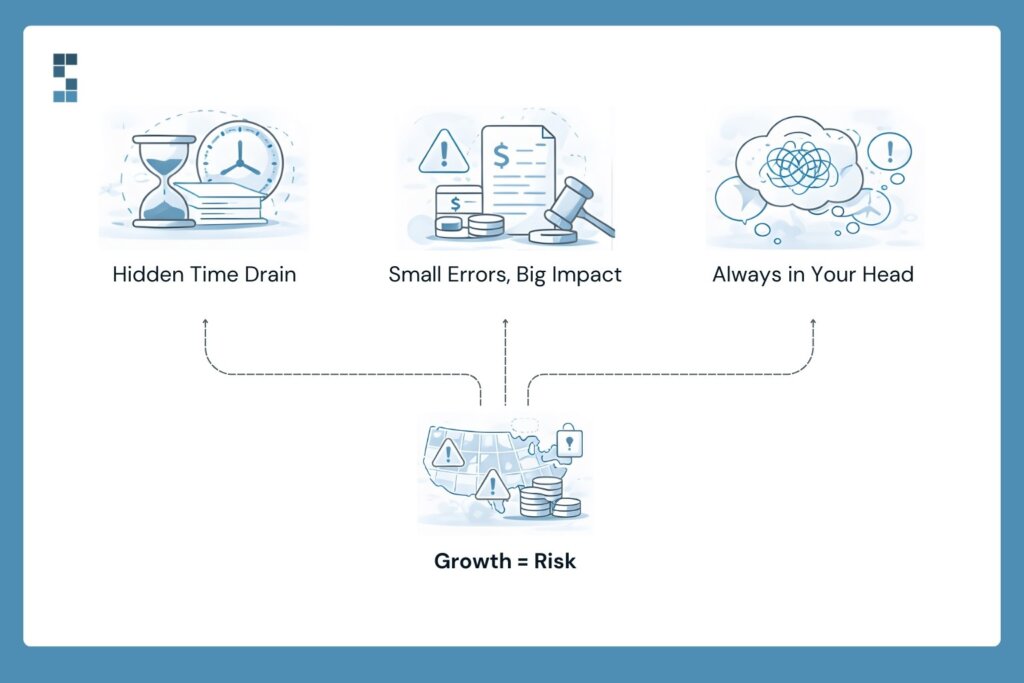
Most consulting firm owners spend between 5 and 10 hours per month wrestling with payroll-related tasks. That includes calculating wages, tracking deductions, filing taxes, and fixing the inevitable mistakes that crop up when you’re rushing through the process at 11 PM. Ten hours might not sound catastrophic. But multiply that by your hourly consulting rate, and suddenly you’re looking at thousands of dollars in opportunity cost every single month.
Then there’s the complexity. Maybe you started with a handful of local employees, and payroll was genuinely manageable. But consulting firms grow in unpredictable ways. That brilliant strategist you hired works remotely from Texas. Your new project manager lives in New York. And now you’ve got consultants scattered across multiple states, each with different unemployment insurance requirements, workers’ compensation rules, and tax withholding regulations.
Multi-state payroll isn’t just complicated—it’s a minefield. One misstep, and you’re facing penalties from agencies you didn’t even know existed.
But here’s what nobody talks about: the mental load. Even when you’re not actively doing payroll, it’s lurking in the back of your mind. Did I file that quarterly report? Did I classify that contractor correctly? Is someone going to call me about a discrepancy I missed three months ago? This low-grade anxiety follows you into client meetings, disrupts your focus during strategic planning, and keeps you checking email at midnight. Payroll errors don’t just cost money—they erode employee trust. Nothing damages morale faster than a missed paycheck or incorrect withholding. Your team shouldn’t have to wonder whether they can count on you for something this fundamental.
Why Payroll Delegation Changes Everything
Here’s the thing about delegating payroll: the benefits extend far beyond reclaiming those five to ten hours.
Yes, you get time back. That’s the apparent win. But what you really get is headspace—mental clarity. The ability to walk into Monday morning focused on landing that new client instead of fixing Friday’s payroll crisis.
When you hand payroll to professionals who live and breathe employment regulations across all fifty states, you’re not just outsourcing a task—you’re buying expertise you could never develop on your own. These are people who track legislative changes, understand nexus rules, and know precisely how to handle that tricky contractor classification question that’s been keeping you up at night.
The improvement in accuracy alone is worth the investment. One business owner working with System Six shared that when auditors reviewed their books, they found “exactly zero errors.” Zero. That’s not just impressive—it’s the standard you deserve when your professional reputation is on the line.
And then there’s the stress relief. Betsy, who runs an investor-backed business, put it simply: “System Six has done wonders for my stress level to feel like this is all now taken care of with a professional partner.” That feeling of having a professional partner—someone who genuinely has your back on compliance—is hard to quantify but impossible to overstate.
So let me ask you: what would you do with an extra ten hours a month? Land one more client? Finally, take that Friday afternoon off? Actually be present at your kid’s soccer game without your phone buzzing with payroll questions?
From Administrator to Leader—A Real Transformation
Delegation isn’t abdication. It’s strategic leadership.
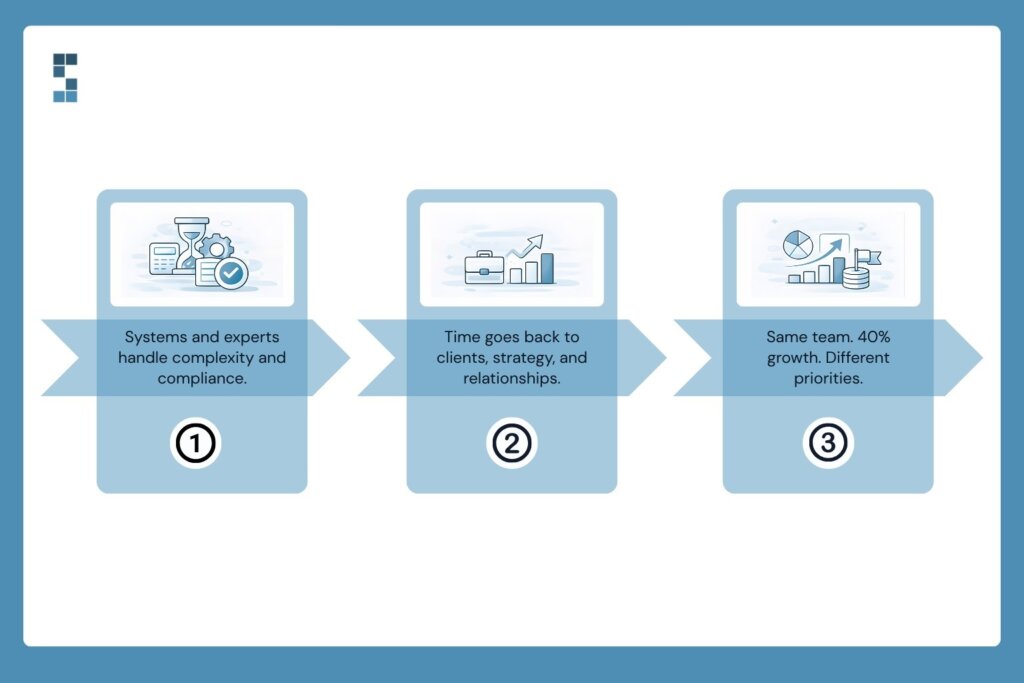
Consider Mark’s story. He runs an environmental consulting firm, and before he made the switch, he was spending twelve to fifteen hours every week on financial tasks—payroll included. That’s almost two full workdays. Every single week. Disappearing into spreadsheets instead of serving clients or growing his business.
After partnering with a professional team to handle his finances and payroll, everything changed. Automated systems took over the tedious work. Multi-state compliance became someone else’s expertise. And Mark? He redirected all that reclaimed time toward what he does best: building client relationships and developing new business.
The result? His firm grew by forty percent the following year. Same administrative headcount. Dramatically different outcomes.
“Working with System Six to automate our finances changed everything,” Mark shared. “Now I can pull up real-time insights from my phone between client meetings. We’ve grown 40% this year because I can focus on clients instead of paperwork.”
That’s the fundamental transformation here. When you stop being the payroll administrator, you can finally start being the leader your team needs. The visionary who sets direction. The relationship builder who lands new accounts. The strategist who sees opportunities others miss. You didn’t hire yourself to process W-2s. You hired yourself to build something remarkable.
Making the Transition
Getting started is simpler than you might think.
Most consulting firms are fully operational with a new payroll partner within four weeks. That includes data cleanup, system integration, and getting everyone comfortable with the new workflow. If you’re already using QuickBooks Online, the timeline often shrinks to two or three weeks.
A good partner will coordinate seamlessly with your existing CPA. They’ll handle the multi-state complexity that’s been giving you headaches. And here’s the key: you maintain visibility without the burden of execution. You can still see everything happening with your payroll—you just don’t have to be the one making it happen.
Want a practical first step? Take fifteen minutes right now to calculate how many hours you spent on payroll last month. Be honest. Include the time you spent worrying about it, researching compliance questions, and fixing errors. Now multiply that number by your hourly consulting rate.
That figure represents the actual cost of DIY payroll to your business. Not just in dollars, but in opportunities you never had time to pursue.
Reclaim Your Role as Leader
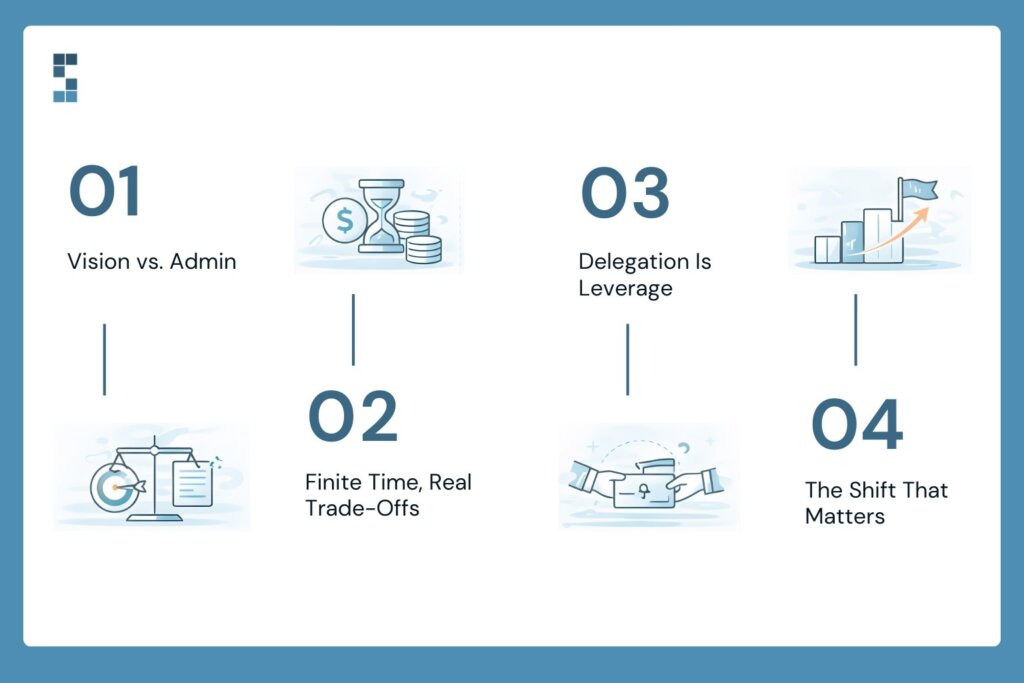
You didn’t start your consulting firm to become a payroll administrator. You started it to solve problems, serve clients, and build something meaningful. Somewhere along the way, the administrative burden piled up until it threatened to bury the vision that got you here in the first place.
Delegating payroll isn’t about admitting you can’t handle it. It’s about recognizing that your time and energy are finite resources—and they deserve to be invested where they’ll generate the greatest return. For most consulting firm owners, that means client work, team development, and strategic growth. Not tax withholding calculations.
Stop spending evenings and weekends on payroll. Start focusing on what you do best: leading your team and growing your practice.
What would your business look like if you finally reclaimed those hours for actual leadership?
About System Six
System Six is a Seattle-based bookkeeping and financial services firm that helps small and mid-sized businesses streamline their financial operations. We specialize in providing technology-driven financial management solutions for consulting firms, enabling owners to focus on growing their businesses without worrying about cash flow, payroll, or compliance. Our team of over 40 professionals brings an average of 10+ years of accounting experience to every client relationship, serving more than 175 businesses across the U.S. With a 9.5/10 NPS score, we deliver the financial clarity and peace of mind that consulting firm owners need to thrive. Learn more at www.systemsix.com.