The honest answer: three to four weeks from the day the seller delivers complete data for a full-scope quality of earnings analysis on a typical lower-middle-market deal, and inside ten business days for a QoE Lite. Not the two days some software-first services advertise, and not the six to eight weeks a backlogged firm will quietly consume.
The more important point is the phrase most providers skip: from the day the seller delivers complete data. The QoE clock does not start when you sign the engagement letter. It starts when the data shows up, and that distinction is where deal timelines actually live or die. I have been through this three times as a buyer, always with an exclusivity window burning, so let me walk through what really drives QoE duration and how to compress it.
The honest range
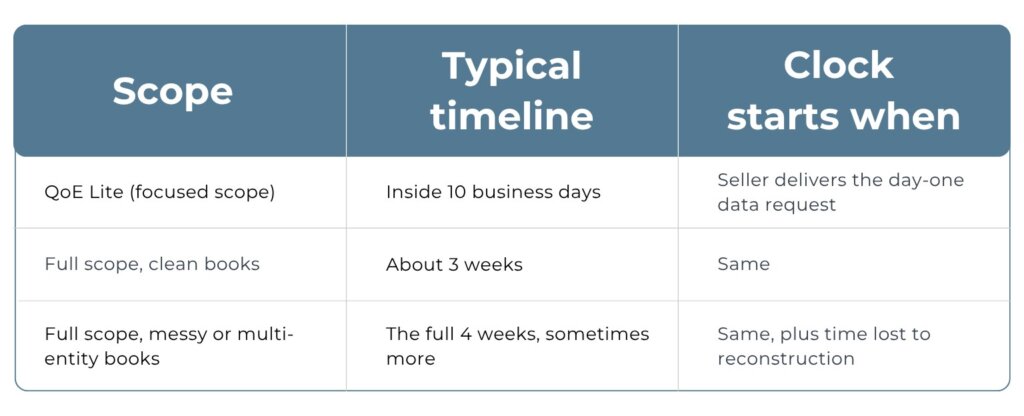
Be suspicious of both tails. A QoE promised in 48 hours is a template, not an analysis; nobody proves cash in two days. And a provider quoting six-plus weeks because of staffing backlog is not describing the work, they are describing their capacity problem, and paying for it with your deal clock.
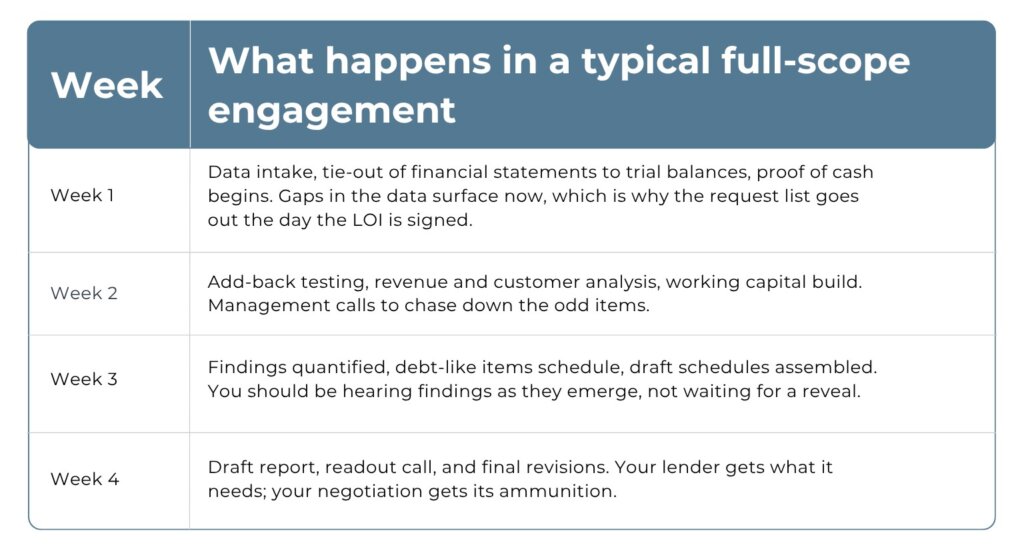
What a full-scope engagement actually looks like, week by week
The three things that drive where you land
Data readiness. The single biggest variable, and it belongs to the seller. A seller who takes three weeks to produce bank statements adds three weeks to your timeline, full stop. Get the day-one request list to the seller the day the LOI is signed, and keep it lean: request only the most important things. Don’t kill the deal immediately with a massive, overwhelming diligence list. A focused list gets answered in days; a 200-line data dump request gets answered never.
The state of the books. Clean accrual books in QuickBooks Online move fast. Cash-basis books with commingled personal expenses and an inventory number nobody believes move slower, because the team is reconstructing reality before it can analyze anything. If you already know the books are rough, budget for the top of the range and scope accordingly.
Scope. QoE Lite lands inside ten business days because it concentrates on the kill-shot questions. Full scope takes the extra weeks because the working capital build, the debt-like items schedule, and dollar-quantified findings are real analytical work. Our QoE Lite vs. full-scope guide covers which one your deal needs.
Where the QoE sits in your deal clock
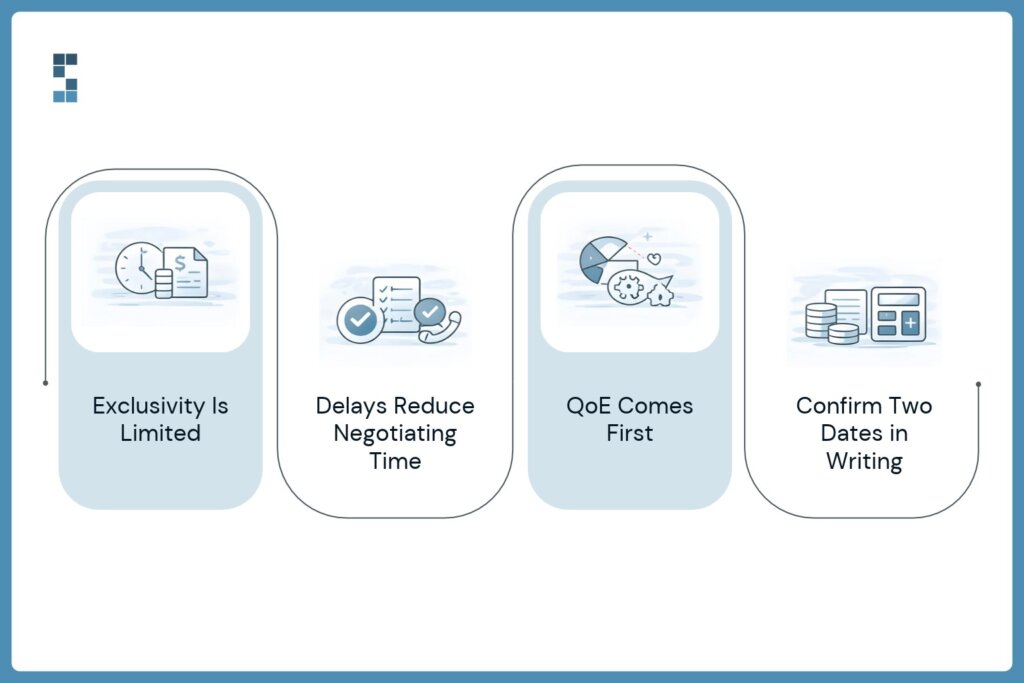
Most LOIs grant 60–90 days of exclusivity, and the QoE sits at the front of the queue: financing commitment, legal diligence, and purchase agreement drafting all wait on its findings. A four-week QoE inside a 60-day window leaves your lender and your lawyer half the clock. A six-week one leaves them scraps and hands the seller leverage as the expiration date approaches.
That is why the question to ask a provider is not just how long, but when can you start. A fast team that cannot start for a month is slower than a steady one that starts Monday. Ask for both numbers in writing: start date and duration. A firm that will not commit to either is reserving the right to consume your window.
How to compress the timeline (without cutting corners)
Four moves, all cheap. Send the data request the day the LOI is signed, not the day the engagement letter is countersigned. Keep the request list short and important. Ask the seller to grant read-only access to the accounting system, which eliminates the export-and-email shuffle entirely. And pick a provider that surfaces findings as they emerge, so your lender, your lawyer, and your negotiation are moving in parallel with the analysis instead of waiting for a final PDF.
That last one is a scoping question worth asking directly: will I hear findings weekly, or at the end? The difference is not comfort; it is calendar. A finding you learn in week one is a term you renegotiate in week two. A finding you learn in week four is an extension request.
Frequently asked questions
How long does a QoE take?
Three to four weeks from receipt of complete data for a full-scope analysis on a typical lower-middle-market deal; inside ten business days for a QoE Lite. Seller responsiveness is the biggest variable.
What is the fastest a QoE can be done?
A QoE Lite on clean books with a responsive seller can land in under two weeks. Anything promised in a day or two is a template review, not a quality of earnings analysis; there is no way to prove cash that fast.
What delays a QoE most often?
Slow seller data delivery, followed by messy books that need reconstruction before analysis. Both are partly manageable: send a lean request list at LOI signing and budget extra time if you know the books are rough.
When should I order the QoE?
Immediately after signing the LOI. The engagement can be scoped during LOI negotiation so the data request goes out on day one of exclusivity, which protects the back half of your window for financing and legal.
Know your start date before you sign the LOI
If you are negotiating an LOI now, the highest-leverage call you can make is the one that locks a diligence start date. Send us the CIM or the seller’s P&L and a partner will come back with scope, a fixed fee, and the earliest start, usually within a day. Your exclusivity window is the scarcest asset in the deal; we scope around it.