You budgeted $800 for bookkeeping this month. The invoice says $1,847.
Your bookkeeper spent extra time reconciling Q4, tracking down missing receipts, and preparing for tax season. All legitimate work. All billable hours. And all completely unpredictable when you were planning your monthly cash flow.
Sound familiar?
Most consulting firm owners don’t realize their “affordable” hourly bookkeeper might actually be costing them more than predictable subscription pricing—not just in dollars, but in stress, time, and strategic opportunity. I’ve watched dozens of consulting firms struggle with this exact decision, and here’s what I’ve learned: the pricing model you choose affects way more than your monthly costs.
Let’s break down what each model actually costs you, what the invoices don’t tell you, and how to calculate which one makes sense for your firm.
The Real Difference Between Hourly and Subscription Pricing
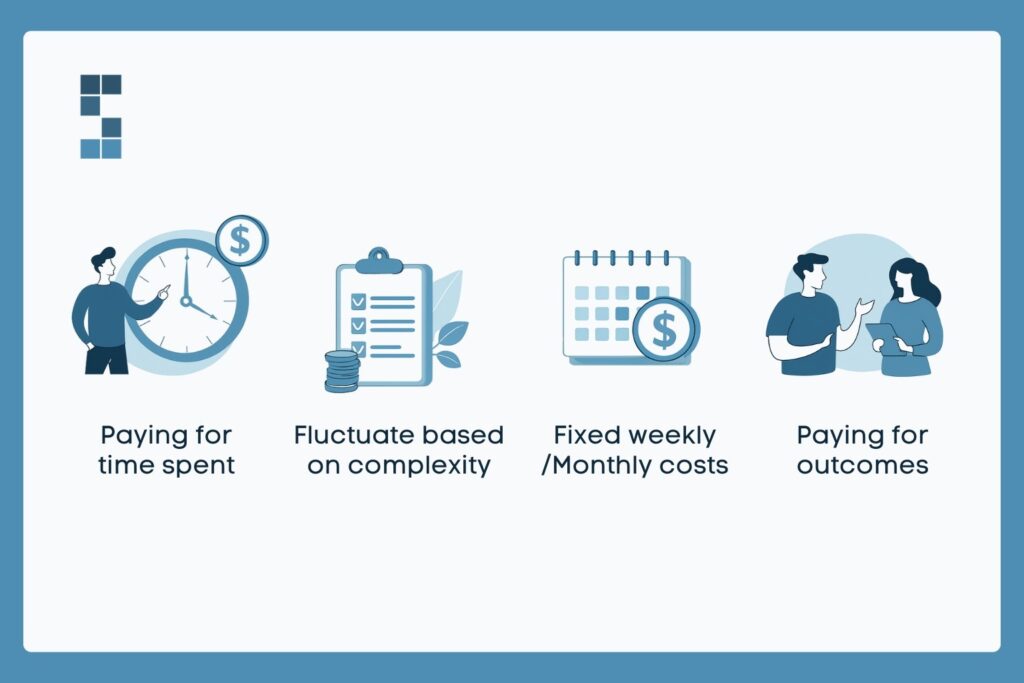
Here’s how hourly bookkeeping typically works. You pay somewhere between $30 and $300 per hour, depending on your bookkeeper’s expertise and your location. Sounds straightforward, right?
But here’s the catch. You’re not paying for results—you’re paying for time spent. More transactions this month? Higher bill. Complicated reconciliation? Higher bill. Does your bookkeeper need to learn your new project management software? You’re paying for their education.
One strategy consultant told me he spent every Monday morning sorting through the previous week’s transactions. “That’s half a day I wasn’t spending with clients or developing new business,” he said. “It was costing me a new client every quarter.” When he finally looked at his bookkeeper’s hours, he realized he was also paying them to figure out the mess he’d created over the weekend.
Subscription pricing flips this model entirely. You pay a fixed weekly or monthly fee based on your business’s complexity—not the hours it takes. At System Six, that typically runs $300-$800 per week, depending on firm size. But here’s what stays the same: whether it’s a simple month or a complex quarter-end, your cost remains the same.
The psychological shift is massive. With hourly pricing, you’re buying time. With subscription pricing, you’re buying outcomes. You stop thinking “Should I bother my bookkeeper with this question?” and start thinking “What financial insights do I need to grow my business?”
What the Invoice Doesn’t Tell You
Let’s talk about costs that never appear on your bookkeeping invoice but still drain your bank account.
First, there’s scope creep—every “just a quick question” email. Every phone call is to clarify a transaction—every follow-up about a vendor payment. With hourly pricing, all of that gets metered. You learn to ration your communication, which means you make decisions without complete information. How much does that cost you?
Then there’s the learning curve premium. When you pay hourly, you’re literally paying your bookkeeper to figure out your business. They need to understand your revenue model, project structures, contractor relationships, and multi-state compliance requirements. That’s not a quick conversation—that’s months of discovery billed by the hour.
Here’s a real example that illustrates the hidden costs. One System Six client discovered they’d been making a simple bookkeeping error that was costing them $700 in unnecessary bank fees each month. That single mistake was eating $8,400 annually—way more than the difference between hourly and subscription pricing.
But the highest hidden cost? Your time.
Most consulting firm owners spend 15-20 hours monthly on financial administration. At typical consulting rates of $200-500 per hour, that represents $3,000-10,000 monthly in lost billable opportunity. Mark, who runs an environmental consulting firm, reclaimed 10+ hours weekly after switching to automated subscription services. His firm grew 40% the following year. Same team. Same expertise. Just way less time categorizing expenses on Sunday nights.
And speaking of Sunday nights—let’s talk about the mental bandwidth drain. There’s this background anxiety that comes with unpredictable costs. You can’t confidently forecast your financial management expenses. You hesitate before calling your bookkeeper. You make decisions in a fog of incomplete information.
As Betsy, who runs an investor-backed business, put it: “System Six has done wonders for my stress level to feel like this is all now taken care of with a professional partner.”
That peace of mind doesn’t show up on any invoice. But it absolutely affects your bottom line.
When Hourly Pricing Actually Makes Sense
Look, I’m not here to tell you subscription pricing works for everyone. It doesn’t.
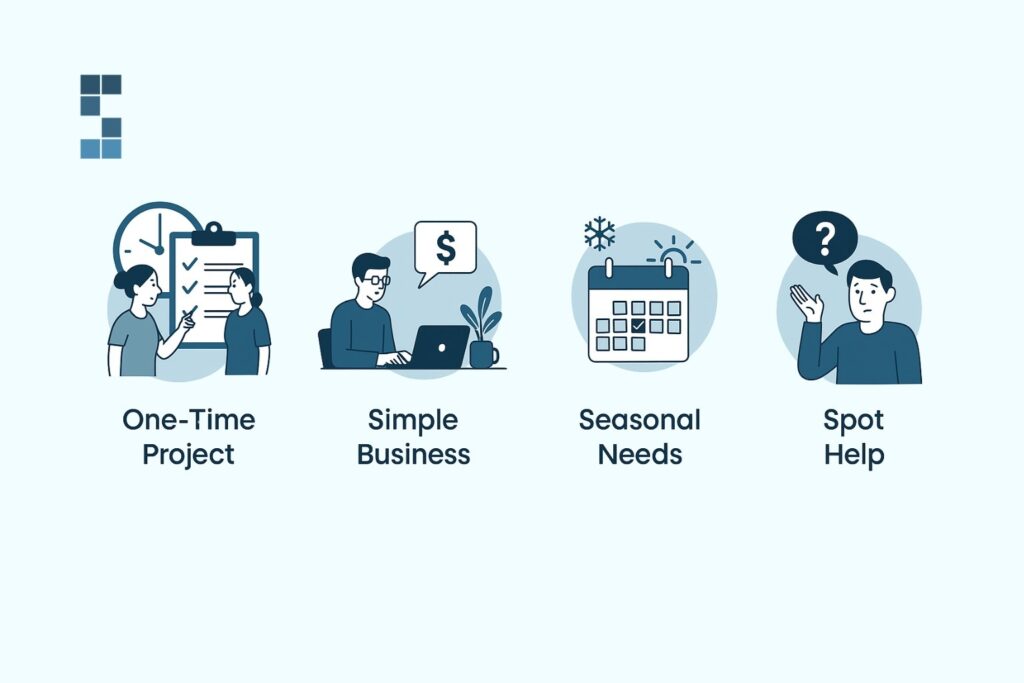
Hourly pricing can make perfect sense for one-time projects—historical cleanup, system migration, special audit preparation. If you need eight hours of work once and you’re done, paying hourly is straightforward and cost-effective.
It can also work for genuinely simple businesses. If you’re a solo consultant with few transactions and only need 2-3 hours monthly, an hourly rate might be your best bet. Some seasonal companies with dramatically different needs month to month might also benefit from the flexibility.
And if you’re doing most of the work yourself and only need spot help? Hourly can work fine.
But here’s the reality check most consulting firms miss: you’re probably more complex than you think. Project-based revenue? That’s complex. Multi-state operations? Complex. Contractor management? Complex. Growth aspirations that require investor reporting? Definitely complex.
I’ve watched consulting firm owners convince themselves they’re simple because they want to save on bookkeeping costs. Then they hit a growth inflection point and realize their “affordable” hourly bookkeeper can’t scale with them. The transition costs way more than if they’d just started with the right model from the beginning.
The Subscription Advantage: Predictability Meets Performance
Here’s where subscription pricing really shines for growing consulting firms.
Budget certainty changes everything. You know your costs 12 months in advance—no surprise bills during busy seasons. Your cash flow forecasting actually works. One client told us, “For any internal NPS tracking, please mark us down as an 11/10. Your team is awesome, proactive, and exactly what we need.”
But the real advantage is unlimited communication. You stop watching the meter. You ask the questions you need to ask. Strategic advisory becomes included, not billed separately. Your bookkeeper transforms from a vendor you’re afraid to bother into a true partner invested in your success.
And then there’s scalability. Your business grows from $2M to $8M—your transaction volume triples. You add multi-state payroll. With hourly pricing, your costs explode. With subscription pricing? They stay predictable because the model was designed to scale with you.
The ROI is measurable. System Six’s consulting clients typically see 300%+ first-year returns, with payback periods of just 2-3 months. They reclaim 15-20 hours monthly for billable work. One strategy consulting firm was spending 20 hours monthly on financial administration. At their owner’s $ 200-per-hour rate, that represented $4,000 in monthly opportunity cost. After implementing automated subscription systems, they reduced this to 3 hours per month—a $600 time investment.
The math is straightforward. They saved $3,400 per month in recovered billable time while paying $800 monthly for the system. That’s a 325% return on investment before you even consider error prevention or growth opportunities.
And the results speak for themselves: 9.5/10 NPS score across 175+ clients, 90%+ retention rate among consulting firms. These aren’t companies sticking around because they’re locked into contracts—System Six operates on a fixed weekly fee with no long-term commitments. They stay because the value is undeniable.
Run Your Own Numbers
Ready to figure out which model actually costs you less? Start here.
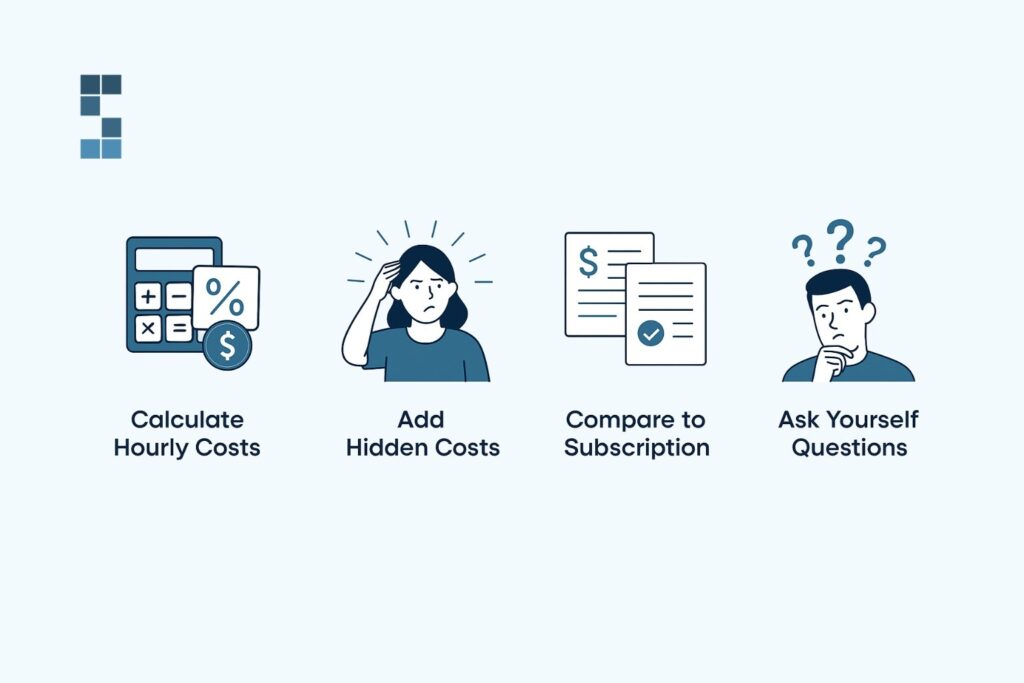
Calculate your actual hourly costs over the last 12 months. Add up all the bookkeeping invoices and divide by 12. Don’t forget those surprise bills from quarter-end or tax season. That’s your real monthly average.
Now add the hidden costs. How many hours did you spend on financial tasks last month? Multiply that by your effective hourly rate. Add any costs from errors, missed deadlines, or cash flow issues. Be honest about what those Sunday nights cost you in family time and mental health.
Compare that total to subscription pricing. What would a fixed monthly fee run? What services are included? Are there communication limits? Is strategic guidance part of the package?
Finally, ask yourself the hard questions. How often do you hold back from calling your bookkeeper because you’re worried about the cost? What client work could you complete with 15-20 extra hours each month? What does cash flow unpredictability cost you in stress and missed opportunities?
The answers might surprise you.
The Bottom Line on Pricing Models
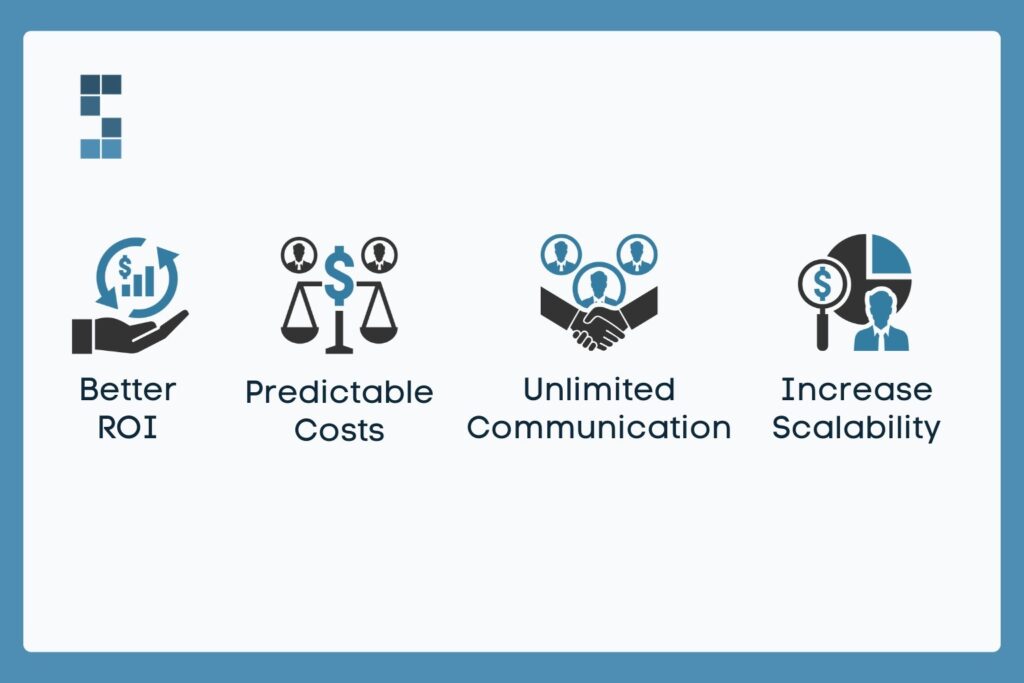
Here’s what I want you to understand: this isn’t really about which model is cheaper on paper. It’s about which delivers better ROI for your specific situation.
For consulting firms generating $1M-$20 in revenue, subscription pricing typically delivers lower total cost AND better outcomes. The predictability alone is worth the investment. The unlimited communication changes how you use financial information. The scalability means you’re not switching systems every time you hit a growth milestone.
But don’t take my word for it. Calculate your actual all-in costs over the last 12 months. Include your time, your stress, your lost opportunities. Then compare that reality to what subscription pricing would actually run.
The question isn’t whether you can afford subscription pricing. It’s whether you can afford to keep losing billable hours and sleep to financial administration.
If you’re spending more than 10 hours monthly on financial tasks, it might be time to reconsider your pricing model. The fixed weekly fee model was explicitly designed for consulting firms tired of unpredictable costs and weekend bookkeeping sessions because you became a consultant to solve complex client problems—not to become an amateur accountant wrestling with reconciliations on Sunday nights.
About System Six
System Six is a Seattle-based bookkeeping and financial services firm specializing in consulting and professional service businesses. Our team of 40+ professionals brings an average of 10+ years of accounting experience to every client relationship, serving over 175 companies across the U.S. We operate on a fixed weekly fee model with no long-term contracts because we believe in earning your business through consistent value delivery. Learn more at www.systemsix.com.