Sarah almost missed the most significant opportunity of her consulting career.
A potential client wanted to sign a six-month retainer worth $180,000—a dream project. Perfect fit. But Sarah couldn’t say yes. Why? She had no idea if she could actually afford to hire the two consultants she’d need to deliver the work. Her financials were two months behind, her cash flow was a mystery, and her “forecasting” consisted of hoping things worked out.
The client went elsewhere.
Here’s the thing—Sarah’s brilliant at helping her clients navigate complex strategy decisions. She can spot market trends six months before they hit. But when it comes to her own firm’s finances? She’s flying blind. And she’s not alone.
You didn’t start your consulting firm to become a financial expert. You started it because you’re exceptional at what you do. But here’s the uncomfortable truth: 2025 is separating consultants who understand their numbers from those who are just really good at what they do. The finance landscape is shifting faster than ever, and the firms that adapt will thrive while others struggle.
Let me show you the seven trends that are reshaping consulting finance right now—and more importantly, what you can actually do about them.
AI-Powered Financial Forecasting Replaces Gut Feelings
Spreadsheets are dead.
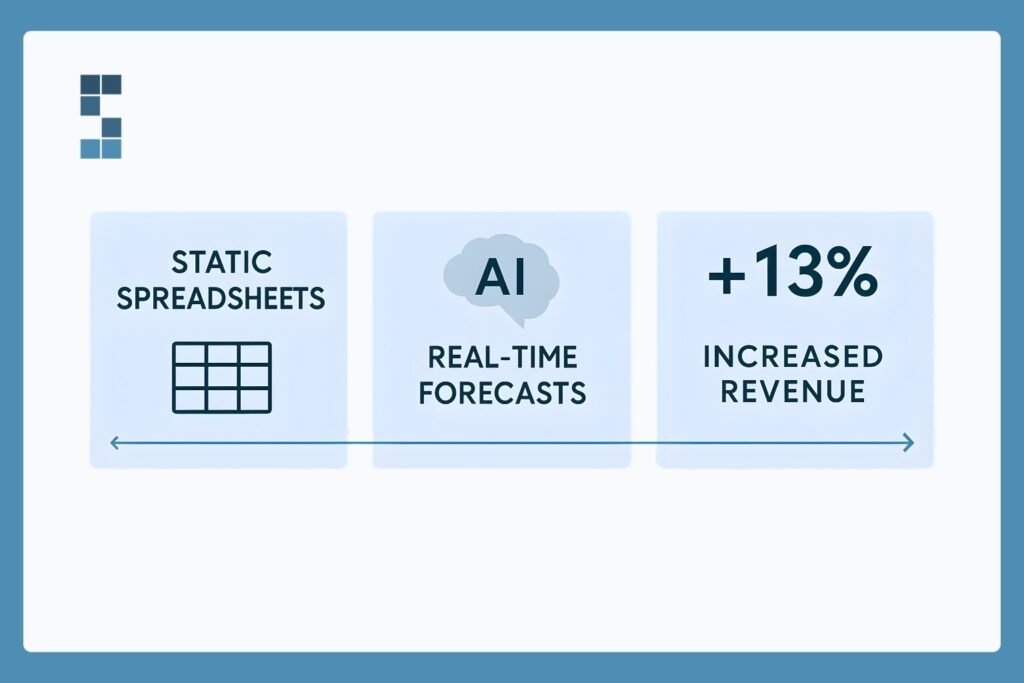
Okay, that’s dramatic. But the annual budget spreadsheet you labored over last December? It was outdated by February. The consulting business moves too fast for static yearly projections. You land a new client, a project gets delayed, someone quits—suddenly, your carefully crafted budget is fiction.
AI and automation are transforming forecasting from annual guesswork to realtime visibility. Instead of asking “What did we think would happen this year?” you can now ask “What’s likely to happen over the next thirteen weeks based on everything happening right now?”
Vincent D., who runs a consulting firm in Bellevue, worked with his finance team to develop a cash forecasting tool that integrates with his accounting system. The result? As he puts it, the tool “significantly improves the speed and accuracy of our forecasting process.” His team went from spending hours manually updating projections to having them refresh automatically.
Companies using AI for predictive analytics are seeing up to 13% increases in revenue. Why? Because they can see opportunities and risks before they fully materialize.
How to prepare: Start with basic automated cash flow tracking. You don’t need to forecast five years out—begin with a simple thirteen-week cash flow projection that updates monthly. Focus on accuracy over sophistication.
Realtime Financial Dashboards Become Non-Negotiable
When was the last time you actually knew your realtime cash position?
Most consultants wait until the month-end to find out how they’re doing. But month-end reports are like reading yesterday’s weather forecast—interesting, but not particularly useful for making decisions today.
The shift is toward continuous visibility. Alecia K. from Seattle had an emotional reaction when she first saw realtime financial reporting. She describes seeing “projected cashflow integrated with realtime QuickBooks” and admits, “I had tears come to my eyes.” That’s the power of actually seeing what’s happening with your money in real time.
Think about it. You can check your firm’s cash position from your phone between client meetings. You can see which invoices are overdue, which projects are most profitable, and whether you’re on track for the quarter—all updated continuously as transactions occur.
How to prepare: Implement cloud-based systems that connect your bank accounts, invoicing, and expenses. Start with basic dashboards showing cash position, accounts receivable aging, and profitability trends before building out more complex analytics.
Project-Level Profitability Tracking Goes Mainstream
Here’s a question that should be easy to answer: Which of your clients actually makes you money?
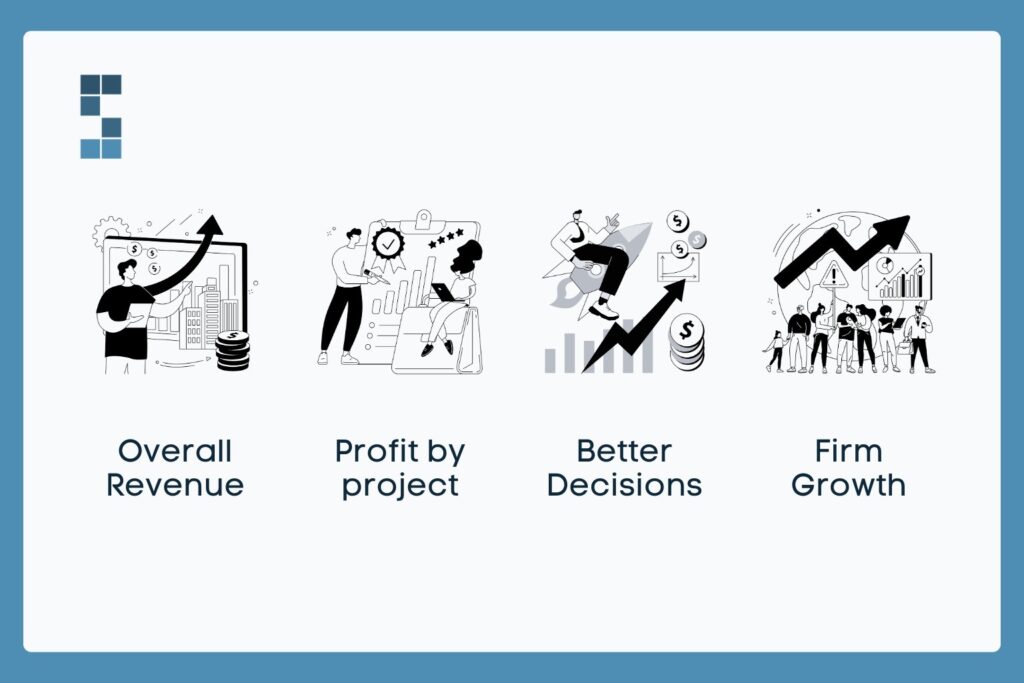
Lots of consultants can’t answer that. They know their overall revenue and that they’re profitable, but they don’t know that Client A is highly profitable. At the same time, Client B barely breaks even after accounting for all the hours and complexity involved.
The shift is from overall revenue tracking to project-level economics. When you can see profitability by project, client, or service line, everything changes. You start saying yes to the right opportunities and no to the wrong ones.
One consulting firm owner shared that after gaining this visibility, his firm grew 40% the following year while maintaining the exact administrative headcount. He could finally see which types of projects to pursue and which to avoid.
How to prepare: Integrate your time tracking system with your financial software. Even basic project-level tracking reveals patterns you’ve been missing. Start by categorizing revenue and direct costs by project, then gradually add sophistication.
Cash Flow Management Trumps Revenue Growth
Revenue is vanity. Cash flow is sanity.
You can be profitable on paper and still fail if you can’t make payroll. The consulting business is particularly vulnerable to this because there’s often a lag between delivering work and getting paid. You’ve got salaries going out every two weeks while client payments trickle in on Net 30 or Net 60 terms.
Shane B., who owns a dental office in Tacoma, talks about how his financial partner helped him “focus on the business, all the while trusting things taking place on the back-end.” That peace of mind comes from knowing your cash flow is actively managed, not just hoped for.
Cash flow is like oxygen for your business—you don’t think about it until it’s gone. And by then, it’s usually too late.
The firms winning in 2025 are building strategic cash flow forecasting that looks 12 to 18 months ahead. They’re modeling scenarios for growth investments, seasonal fluctuations, and hiring decisions to ensure they never face unpleasant surprises.
How to prepare: Build a rolling 12-month cash flow model that accounts for your payment timing patterns. Factor in seasonal variations—many clients pay more slowly during holidays or summer. Create decision triggers based on cash position.
Automated Financial Operations Free Up Strategic Time
You didn’t start your consulting firm to categorize expenses.
But how much time did you spend on financial admin last month? Entering transactions, chasing invoices, categorizing expenses, and reconciling accounts. Add it up. Now multiply that by your billable rate. That’s your opportunity cost.
The automation revolution is here, and it’s transforming everything from manual entry to AI-powered transaction processing. Firms are reclaiming 15 to 20 hours per month that were previously lost to administrative tasks. That’s time redirected to billable work, business development, or—radical thought—your actual life.
Paul, who runs an investor-backed business, raves about his financial team being “proactive at catching mistakes I’ve made” and notes that auditors found “exactly zero errors.” Zero. That’s the difference between manual processes and automated systems with expert oversight.
How to prepare: Start by automating the most painful tasks first. Bill pay, invoicing, and expense categorization offer immediate returns. Don’t try to automate everything at once—master one system before adding complexity.
Multi-State Compliance Complexity Increases
Remember when everyone worked in one office and compliance was straightforward?
Remote work changed everything. Now you might have consultants in five different states, clients in ten others, and suddenly you’re navigating a multi-state tax nightmare. Nexus rules, contractor classification, remote payroll compliance—get any of it wrong and it’s expensive.
The number of full-time independent consultants grew to 27.7 million in 2024, and many consulting firms are hiring across state lines without understanding the compliance implications. Each state has different rules about when you need to withhold taxes, pay unemployment insurance, and register your business.
Julie R., whose company works with a sophisticated accounting team, praises them for being “attentive to the smallest details around our complex accounting needs.” That attention to detail isn’t optional anymore—it’s essential for avoiding costly mistakes.
How to prepare: Audit your current compliance exposure. Where are your team members located? Where are your clients? Do you have nexus in states where you’re not registered? Consider working with specialists who understand the specific compliance issues in consulting.
Financial Advisory Replaces Basic Bookkeeping
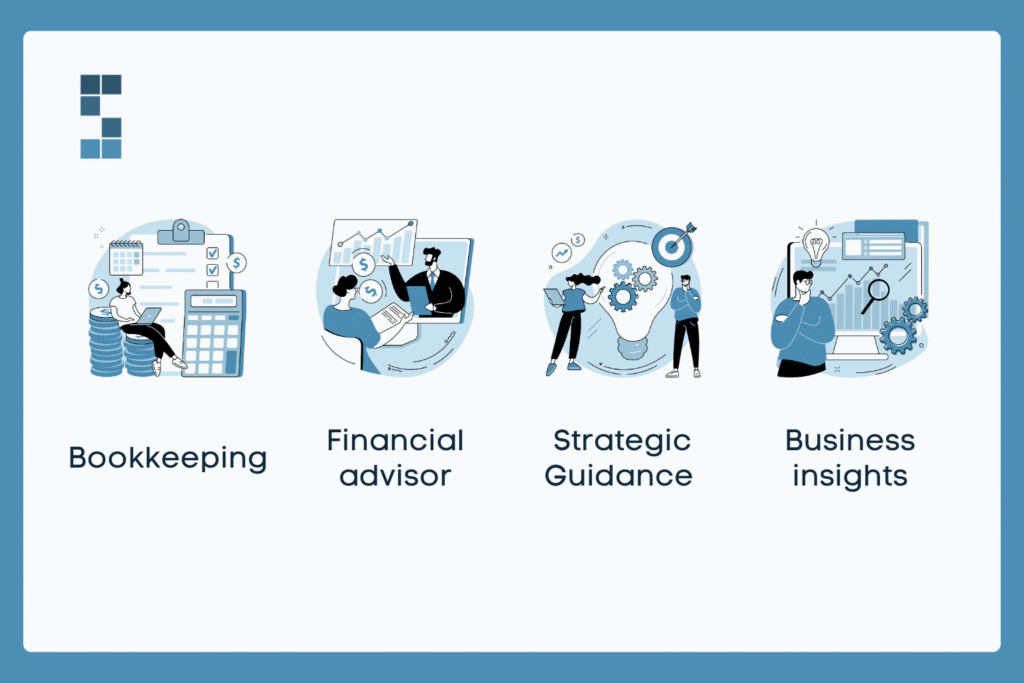
Consultants don’t need bookkeepers anymore. They need strategic financial partners.
The evolution is from recording transactions to providing CFO-level insights. You need someone who can help you make decisions about hiring, pricing, expansion, and investment—not just someone who can tell you what happened last month.
Here’s a weird connection: What do beehives and modern consulting firms have in common? Both need strategic intelligence flowing from the front lines to leadership. Bees constantly communicate about threats and opportunities. Your financial systems should do the same.
JT C. captures this perfectly when he describes his financial team providing “an outside view, a 35,000-foot look at what you’re doing that isn’t possible from the inside out.” He reflects that if he’d made the switch sooner, his “business outcomes would have been SUBSTANTIALLY DIFFERENT.”
That’s the shift. Financial management isn’t about compliance and accuracy anymore—though those remain essential. It’s about gaining a strategic advantage through better visibility and more intelligent decisions.
How to prepare: Look for financial partners who understand the challenges of consulting. They should speak your language, understand your business model, and provide insights that help you grow—not just accurate books.
What Happens Next
These seven trends aren’t isolated developments. They’re interconnected shifts toward data-driven financial management that reward firms able to see around corners.
Remember Sarah from the beginning? She didn’t make that mistake twice. She implemented realtime financial dashboards, built rolling forecasts, and automated her financial operations. Six months later, an even bigger opportunity came along—and this time, she said yes immediately. She knew exactly where her cash flow stood, what she could afford to hire, and how the project would impact her bottom line.
That’s what 2025 rewards: consultants who bring the same strategic clarity to their own finances that they provide to clients.
Here’s what you can do this week. Track your time on financial tasks for the next seven days. Every minute spent categorizing transactions, updating spreadsheets, or chasing down numbers. Calculate what that time costs at your billable rate. Then identify your most prominent financial blind spot—the question about your business you can’t easily answer.
Start there.
What could your firm achieve if you had the same financial clarity you provide to your clients? The consulting landscape in 2025 rewards those who can see opportunities before they fully materialize and make confident decisions backed by real data.
Your finances shouldn’t be a mystery. They should be your competitive advantage.
About System Six
System Six is a Seattle-based bookkeeping and financial services firm that helps small and mid-sized businesses streamline their financial operations. We specialize in providing technology-driven financial management solutions for consulting firms, enabling owners to focus on growing their businesses without worrying about cash flow, payroll, or compliance. Our team of over 35 professionals brings an average of 10+ years of accounting experience to every client relationship, serving more than 175 businesses across the U.S. From accurate bookkeeping to cash flow forecasting, we deliver the financial clarity and peace of mind that consulting firm owners need to thrive. Learn more at www.systemsix.com.