
Sarah thought she’d done her homework. She’d asked around, gotten a referral, and hired a bookkeeper who seemed perfectly fine. Six months later, she was sitting in her CPA’s office learning that her payroll taxes hadn’t been filed correctly. The penalties cost her $12,000. Worse? Her biggest client started asking uncomfortable questions about her firm’s financial management.
Your financial services partner isn’t just keeping your books. They’re protecting your professional reputation with every invoice, every payroll run, every tax filing. Get this decision wrong, and you’re not just losing money—you’re risking the credibility you’ve spent years building.
That’s why a well-crafted Request for Proposal matters. It helps you find a partner who understands your business and provides the financial clarity to make confident decisions.
Why Your Financial Services Partner Is Too Important to Wing It
Here’s what most people don’t realize until it’s too late: your finance team touches everything. Payroll. Compliance. Investor reports. Project profitability tracking.
The wrong choice creates real damage. Late payrolls destroy employee morale. Tax penalties drain cash you needed for growth. Messy books make you look unprofessional during audits. One acquisition entrepreneur inherited books so disorganized that his first audit nearly killed the deal’s financing.
Your clients and investors are watching. When you can’t answer basic questions about your finances, people notice. They wonder if the same disorganization affects other parts of your business. Your professional reputation isn’t just about the work you deliver—it’s about demonstrating that you run a tight ship.
The 7 Essential Elements Your Financial Services RFP Must Include
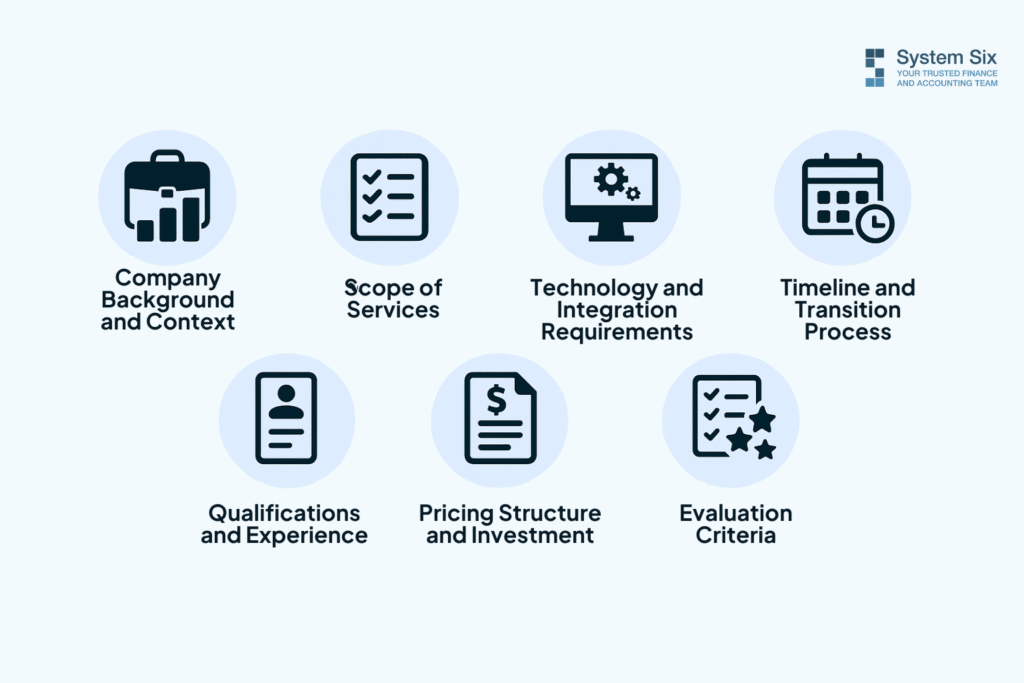
Company Background and Context
Paint a clear picture. What industry are you in? What’s your revenue range and employee count? What financial systems are you using, and what’s driving you crazy about them?
Be specific about growth. Are you a $2M consulting firm scaling to $5M? An entrepreneur who just bought your first company? A 15-person agency adding services faster than you can track them?
This context matters because the right provider needs to understand your specific world. Consulting firms have different needs than e-commerce businesses. Please provide them with the information necessary to craft a relevant proposal.
Scope of Services—Be Specific
Don’t just say “we need bookkeeping.” Break it down.
Monthly bookkeeping and reconciliation? Obviously. But what about payroll? If you have remote employees across multiple states, that’s complex. If you’re working with contractors, proper 1099 classification becomes critical. One misclassification and you’re facing a five-figure IRS audit.
What about bill pay and accounts receivable? Many consulting firms waste hours monthly paying bills and chasing invoices. A good partner automates this so you don’t spend evenings on busywork.
Financial reporting matters too. Do you need basic statements or sophisticated project profitability tracking? If you’re running a consulting practice, you need to know which clients actually make you money. If you have investors, you need reporting packages that meet their requirements.
And consider advisory services. Do you want someone who records what happened, or a partner who helps you forecast and make strategic decisions?
Technology and Integration Requirements
List every piece of software you use. QuickBooks. Harvest for time tracking. HubSpot for CRM. Ramp for expenses.
The right partner should integrate seamlessly with your existing tools. You shouldn’t export spreadsheets and manually transfer data. That’s precisely the administrative waste you’re trying to eliminate.
Be clear about security expectations. What encryption standards do they use? How do they handle data security?
Timeline and Transition Process
When do you need services to start? Be realistic. If your books are a disaster and you need someone operational in two weeks, say so.
How messy are your current books? Clean? Somewhat behind? Complete chaos? The state of your financials affects transition time and the cleanup work required. Don’t pretend everything’s fine—you’re just setting everyone up for unpleasant surprises.
Qualifications and Experience
What industry-specific experience do you require? If you run a consulting firm, you want someone who understands project-based billing, utilization rates, and milestone-based cash flow.
Ask about team structure. Who will actually work on your account? What happens if your main contact leaves? You need backup, not a single point of failure.
Client retention rates tell you a lot. If clients keep leaving after a year, that’s a red flag. Over 95% retention suggests consistent value delivery.
And get references from businesses similar to yours—same industry, same size, same complexity.
Pricing Structure and Investment
Request transparent, detailed pricing. What’s included in the base fee versus what costs extra? Monthly subscription or hourly billing? What happens when your business grows?
Be suspicious of pricing that seems too good to be true. The cheapest option often becomes the most expensive once you factor in mistakes and the time you spend fixing them.
Think ROI instead of just cost. Most consulting firms reclaim 15-20 hours monthly once they outsource financial management. What’s your billable rate? That time pays for the service several times over.
Evaluation Criteria—Tell Them How You’ll Decide
Be upfront about how you’ll make your decision. Is cost your top priority? Industry expertise? Technology capabilities?
Rank your criteria so providers know what matters most. If you’re willing to pay more for search fund experience, say so. If integration with your tech stack is non-negotiable, make that clear.
Include your decision timeline and how they should submit proposals.
Red Flags to Watch For (and Green Flags to Celebrate)
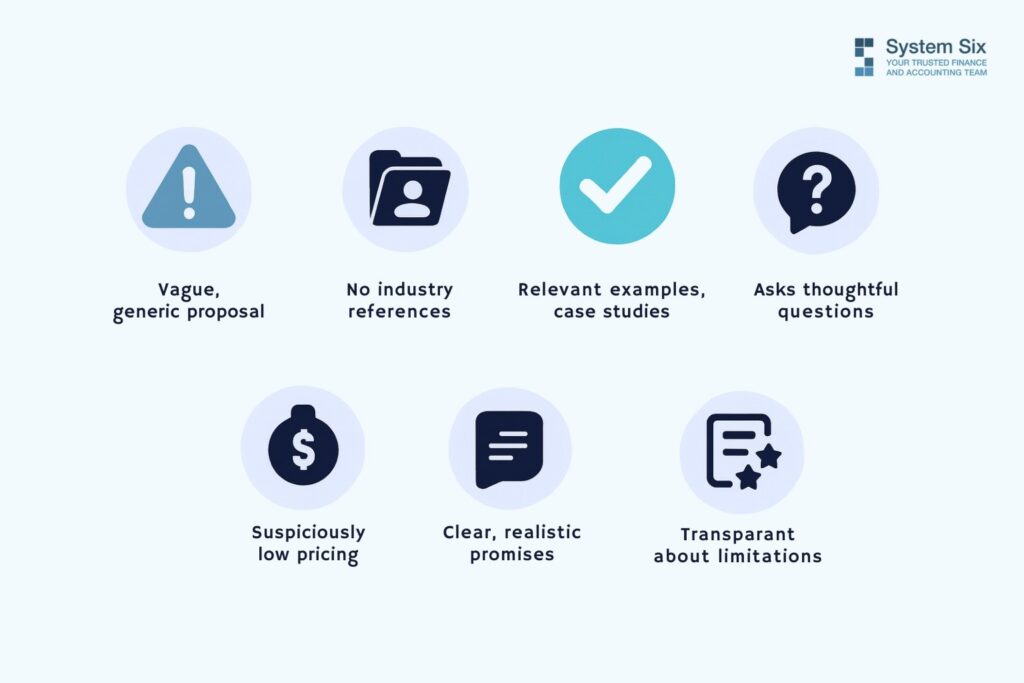
Watch out for vague, template-style responses that could apply to any business. If their proposal doesn’t reference your specific industry, they didn’t do their homework.
Run away from providers who won’t give you industry references. There’s a reason they’re hiding their track record.
Pricing is dramatically lower than everyone else’s. There’s always a catch—usually inexperienced staff, sloppy work, or surprise charges.
Please pay attention to whether they ask you questions. A provider who accepts your RFP without seeking clarification probably doesn’t understand the complexity. The best partners ask thoughtful questions because they want to understand your business honestly.
Green flags? Look for proposals with industry-specific examples and case studies. When they explain their process in detail, that’s confidence speaking. One search fund entrepreneur said his financial partner “has done wonders for my stress level to feel like this is all now taken care of with a professional partner.”
Transparency matters. The best providers are honest about what they can and can’t do. If they promise everything, they’re overselling.
What Happens After You Send Your RFP

Schedule discovery calls with your top three candidates. These conversations reveal what proposals can’t. How do they communicate? Are they genuinely interested in your challenges?
Ask about their onboarding process. What does transition look like? How long does cleanup typically take? A straightforward, structured process suggests professionalism and experience.
Discuss how they handle mistakes because mistakes happen. What matters is how they own their problems and fix them quickly. One client praised their partner for being “inquisitive, asking follow-on questions, and looking around corners”—that proactive approach makes all the difference.
Check those references. Actually call them. Ask specific questions based on your pain points. If cash flow keeps you up at night, ask how their provider helped with forecasting. If compliance worries you, ask about their experience with audits.
Trust your gut. This is a partnership, not just a vendor relationship. You’ll be sharing sensitive financial information and relying on these people for critical decisions. If something feels off, listen to that instinct.
Your Financial Partner as Reputation Insurance

A thorough RFP process might feel like extra work when you’re already overwhelmed. But it’s reputation insurance.
The right financial services partner doesn’t just keep your books clean. They give you clarity and confidence to make better decisions. They eliminate 3 a.m. worries about whether you filed something correctly. They free up the 15-20 hours you’re wasting on administrative tasks so you can focus on growth.
Most importantly, they protect the professional reputation you’ve spent years building. When clients, investors, or potential acquirers look at your financials, they see competence and credibility. No surprises. No red flags. Just a well-run business that knows its numbers.
What could you accomplish if you never had to worry about compliance, payroll, or cash flow again? What would it mean for your business if you actually understood your financials well enough to make confident strategic decisions?
That’s what’s at stake when you choose your financial services partner. Take the time to do it right. Your future self—and your professional reputation—will thank you.
About System Six
System Six is a Seattle-based bookkeeping and financial services firm that helps small and mid-sized businesses streamline their financial operations. We specialize in providing technology-driven financial management solutions for consulting firms, allowing owners to focus on growing their businesses without worrying about cash flow, payroll, or compliance issues. Our team of over 35 professionals brings an average of 10+ years of accounting experience to every client relationship, serving more than 175 businesses across the U.S. From accurate bookkeeping to cash flow forecasting, we deliver the financial clarity and peace of mind that consulting firm owners need to thrive. Learn more at www.systemsix.com.